downloadGroupGroupnoun_press release_995423_000000 copyGroupnoun_Feed_96767_000000Group 19noun_pictures_1817522_000000Member company iconResource item iconStore item iconGroup 19Group 19noun_Photo_2085192_000000 Copynoun_presentation_2096081_000000Group 19Group Copy 7noun_webinar_692730_000000Path
Skip to main content
Default Banner Image

talent

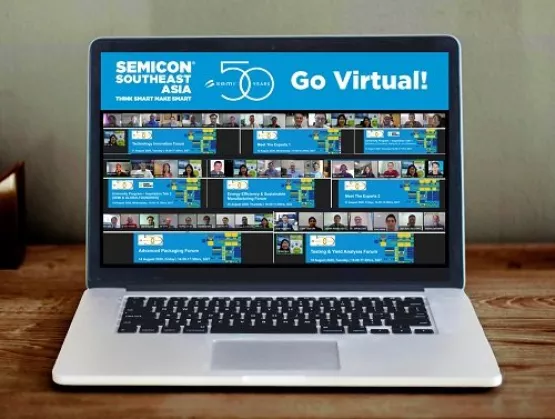
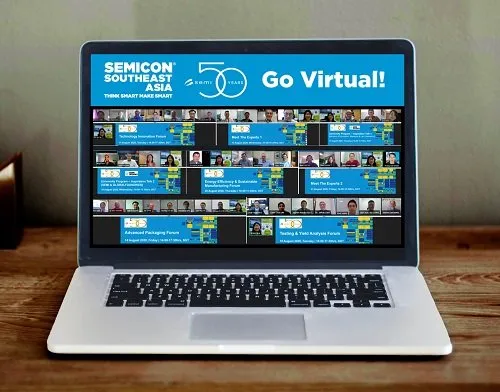
Never before had we expected that SEMICON SEA 2020 would go virtual.The COVID-19 crisis abruptly halted our ability to hold our premier Southeast Asia electronics manufacturing exposition as we typically do – in the physical realm. The pandemic tested our adaptability, challenged our willingness to experiment and, perhaps above all, accelerated not only our own but the world’s digital transformation. We had to change our way of doing business and learn to connect virtually like we had never had before. SEMI continues to believe that virtual interaction is no replacement for face-to-face engagement. But, like the rest of the world, we fast-tracked our digital education and staged the virtual event 20 July to 21 August 2020 to gather supply chain players and help fulfill the tremendous potential of our great industry. For all the suffering the COVID-19 has caused, the pandemic has underscored an important truth – that we need innovation through collaboration now more than ever to help solve the world’s greatest problems. We thank all our event sponsors as we turned what started as a grand experiment into a successful event that drew nearly 3,000 attendees to our webinars, business matching sessions and other online offerings designed to help them uncover new business opportunities. Following are other highlights. Southeast Asia Pavilion at Virtual SEMICON West 2020 In our first collaboration with SEMICON West, our Southeast Asia Pavilion at the event welcomed virtual visitors from around the globe to help them form new connections and grow their businesses. Business Matching Sessions Technical buyers from more than 15 multinational companies along with 141 pre-qualified suppliers attended more than 50 meetings across four online business matching sessions.Technical WebinarsCompany representatives from regions including Malaysia, Singapore, Vietnam, Taiwan, the United States, the UK, Israel, China and Japan shared their expertise and industry insights at SEMICON Southeast Asia 2020 webinars. In addition, experts from leading semiconductor companies such as Micron Semiconductor Asia Operations, ViTrox Corporation Berhad and A*STAR took part in our technical exchange by sharing the latest trends in the rapidly evolving semiconductor industry. Talent Development: Inspirational University Program Talks With building the talent pipeline critical to sustaining growth of Southeast Asia semiconductor manufacturing dynamics, talent champions from Lam Research and GLOBALFOUNDRIES highlighted career opportunities and pathways for young engineers while generating recruiting leads. More than 750 students from Malaysia and Singapore engaged panelists with questions during the sessions. The SEMICON Southeast Asia team extends its tremendous thanks to sponsors and attendees for their support. As we all navigate the pandemic and hope in the near future to awaken to a brighter day, we will continue to connect virtually and, whenever possible, in person as the semiconductor industry evolves and flourishes. The SEMICON SEA 2020 team In the meantime, we will all continue to pull together to support our resilient industry as it outperforms most other manufacturing sectors. Semiconductor capital equipment shipments were up 23% globally in the second quarter of 2020 versus the same period in 2019 and semiconductor chip growth remains in positive territory. Our team has already started planning for SEMICON SEA 2021, scheduled to take place at the Setia Spice Convention Centre in Penang, 18-20 May 2021.We look forward to seeing you again soon as we continue to strengthen the microelectronics ecosystem!Bee Bee Ng is president of SEMI Southeast Asia.
Read More
To attract and cultivate new talent across the microelectronics industry, virtual SEMICON West 2020 offered wide-ranging career insights for engineering students seeking that vital first job and young employees embarking on their careers. They learned about overcoming challenges at work and gained a competitive edge by connecting with industry leaders for insider knowledge. These are just some examples of how the SEMI Foundation and the SEMI Workforce Development and Diversity, Equity and Inclusion (DEI) initiatives serve as a springboard to careers in the industry and help close its talent gap.Following are experiences of aspiring engineers at SEMICON West and career lessons presented to help them shape the future of our semiconductor industry.Jump-Starting Careers at SEMICON West 2020More than 600 students from over 50 colleges and universities across the Unites States joined SEMICON West 2020 to jump-start their careers in the semiconductor industry. With free access to SEMI’s first virtual expo, they connected with recruiters and companies in the exhibit hall, and sponged up insights from speakers about digital internships, job opportunities, and key trends shaping the digital future.“It was almost overwhelming,” said Jason Wong, 20, a junior at San Jose State University working toward an advanced degree in mechanical engineering. “It was kind of like an engineering student’s dream for contacts and knowledge all on one platform.”Wong visited about 15 booths in the online exhibit hall to speak with company representatives about his field of interest – microelectromechanical systems (MEMS).“MEMS is a pretty niche area, so it was really surprising how many companies were there in this category alone,” Wong said.Through the expo’s chat tool, Wong made some solid contacts and has followed up with several engineers via email, LinkedIn and Zoom meetings, cultivating what he believes will be “some long-lasting and valuable connections.”“I’m not really looking for a job at the moment, but I hope to get an internship at some point,” Wong said. “With the current (COVID-19) outbreak, a lot of events with opportunities to interact are no longer available, so this was an enlightening and useful experience for me I plan to attend again.”On the other side of the country in Virginia, Devayani Pawar, 23, found it easy to network at SEMICON West. She especially appreciated the free pass for students and practical sessions in the Smart Workforce Pavilion tailored to help early-career job seekers find opportunities, build contacts, and polish resumes.She was drawn to the Smart Manufacturing Pavilion because of her skills and interests in toolmaking and wafers.“I understand manufacturing and it’s a hot field right now,” said Pawar, who recently earned her master’s degree in data science from George Mason University. “It’s interesting to me how such tiny components can do so much powerful work.”“A lot of people my age aren’t very aware of the microchip industry – they’re mostly focused on information technology and companies like Google, Amazon, or Facebook,” Pawar said.After landing an internship at Micron Technology analyzing wafers and working in clean rooms, she was wowed by the potential of nanotechnology. Pawar learned about the strong demand for data scientists in semiconductor manufacturing. After making connections at SEMICON West and absorbing information, she now has a better handle on career opportunities.“The recruiters and other contacts I made have been so responsive, and now I have a better understanding of use cases and what companies are seeking,” she said.A Day in the Life of an EngineerRight after college in 2017, Erika Gabrielle Hansen joined Applied Materials as an engineer. She told management she wanted to travel, learn about the “big picture” behind the company’s products, and work with customers.In her presentation A Day in the Life of an Engineer at the SEMICON West Smart Workforce Pavilion, she recalled a whirlwind of unforeseen opportunities, soul-searching challenges, and the rewards of personal, professional, and community growth. She also candidly shared lessons learned about pride, collaboration, and resilience.Her journey began when she had the opportunity to share her aspirations for her at career at Applied and landed a dual role as a process engineer and customer account technologist.In her job as a process engineer, Hansen puts her materials engineering degree from Cal Poly, San Luis Obispo to good use analyzing data, solving technical problems, developing new processes to meet customer requirements, and working with cutting-edge technologies. At one moment she might be in a clean-room laboratory wearing a bunny suit doing hands-on work with tools. In another, she could be videoconferencing with hardware, software, and systems engineers worldwide, or preparing a report for upper management.“I was very nervous at first as a process engineer,” Hansen said. “I was the only person in my group who didn’t have a Ph.D. and tried to compensate for that by doing things on my own and not asking for help.”After making a few mistakes, she began to turn to her team for their expertise and sharing the results of her work – both good and bad – with them.“Having humility to ask for help and not let pride get in the way was a huge learning point for me,” she said.As a customer account technologist, she has made a dozen trips to customer sites in four countries to implement new processes or resolve technical issues. By seeing tools in action, she now has what she calls a “whole picture” perspective on their effectiveness, while enjoying the camaraderie of colleagues and sampling local cuisines, sites, and scenes around the world.At one point, she was assigned to lead an international team to resolve an issue with a major customer – her greatest challenge yet and her first time in such a role. She struggled to overcome language barriers and eventually told her boss she might not be the best person to lead the project. He promised to provide more support, and her team went on to resolve the customer’s problem.“I picked myself up, reached out to people with international experience, and changed my communication style,” Hansen said. “I learned it’s okay to be uncomfortable, to flex my leadership style, and be resilient, which is a learned skill.”Building a Better Network: Crucial ConnectionsAndrew Carnegie, one of history’s richest industrialists and most generous philanthropists, said 85 percent of a person’s success is based on “interpersonal relationships” and “abilities to be a human being.” Professional skills account for just 15 percent of success.While advancing to her current role as Chief Marketing Officer for FormFactor, Amy Leong found this advice critical to her career trajectory. Just like the challenge of raising a strong family, building a successful career “takes a village… you can’t do it alone,” she said in her Smart Workforce Pavilion presentation Building a Better Network: Crucial Connections.Outperforming expectations might be essential early in one’s career to get promotions, raises, and the attention, but that mindset goes only so far.“As seniority levels increase, people already know you’re a phenomenal performer and expect nothing less,” Leong said. “So, the higher you go the more vital it is to spend almost a disproportionate amount of effort on building relationships.”Building your network isn’t about the quantity of one’s business cards or LinkedIn connections; it’s about building quality relationships with mutual benefits over the long run.“We need to be smart about return on investment when building our professional network,” she said. “You help me, and I help you. It’s win-win horse trading.”And the most important factor in career success? For Leong, a strong family foundation has mattered most.“Family comes first,” said Leong, who has twin teenagers. “Take care of the ones you love. Check in with your family whenever you can. Family relationships are bound by blood. Thanks to my retired parents and a helpful husband, we tough it through.”She reemphasized the importance of mutually beneficial relationships, noting “A rising tide will lift all boats.”Fostering Talent for the Industry’s FutureDeveloping young talent and future leaders in microelectronics stands as a persistent and growing need – and a critical challenge to realizing expected growth. Emerging technologies such as artificial intelligence, quantum computing, and augmented/virtual reality are expected to impact a huge range of markets, leading to projections that the semiconductor industry will double in size in the next 10 to 15 years.The opportunities for growth and technologies that promise to improve the quality of human life worldwide are breathtaking. The industry’s talent pool will need to scale accordingly, magnifying the importance of expanding industry-wide programs such as the Workforce Development and DEI initiatives that the SEMI Foundation are building. Learn more about how you and your company can get involved with these initiatives on the SEMI Foundation website.Shari Liss is executive director of the SEMI Foundation. She oversees SEMI Workforce Development programs from K-12 through re-skilling for veterans.
Read More
Internships provide a wealth of benefits for students and corporate managers as they work side-by-side in a real-world environment. Students gain practical, hands-on experience and employers get an infusion of fresh energy, diverse ideas and eager talent.The full value of an on-site internship – the ultimate job interview – flowers when it leads to full-time employment.That was before “everything went crazy,” said Tina Revels, university relations manager at KLA, during her Smart Workforce Pavilion presentation The New Reality: Digital Internships at the virtual SEMICON West 2020. Today, amid COVID-19 restrictions, everyone must adjust to a new reality – a virtual reality. Part of this substantial shift has led to internships going digital.“Internships are more important than ever as we shift to a virtual reality,” Revels said, explaining how today’s job seekers and companies alike can make sure digital internships sustain the same mutual benefits as traditional ones.At companies turning to digital internships, managers need to do more upfront planning to re-create real-world experiences that make interns “feel engaged and connected with one another,” Revels said. For prospective interns, digital internships require greater independence, self-management discipline, and responsibility than traditional internships – all critical skills that can lead to permanent employment.Watch Revels’ full presentation below to learn how to get the most out of digital internships. Register for virtual SEMICON West 2020 to access the additional Smart Workforce and Diversity, Equity and Inclusion sessions, which covered dynamic topics such as job searches during uncertain times, creating a culture of inclusivity, supplier diversity, and hiring military veterans. The content is available until September 20, 2020.Learn more about the SEMI Foundation and how its Workforce Development and Diversity, Equity and Inclusion initiatives are helping build the electronics manufacturing and design supply chain’s talent pipeline.Bryson Gauff is program manager for SEMI High Tech U.
Read More
SEMI Korea is back on track. New confirmed COVID-19 cases in Korea now average about 50 per day – with more than half from abroad – after peaking in early March, setting the stage for the Seoul office’s first on-site program since the global coronavirus outbreak began.For four days in late July, SEMI Korea held the Semiconductor Process Technology Tutorial (SPT Tutorial) at COEX, home to SEMICON Korea. Nearly 180 university students and chip engineers gathered for two semiconductor manufacturing courses (beginner and intermediate) taught by professors from schools including Hongik and Sungkyunkwan Universities and senior engineers from major semiconductor makers. The beginner’s course covered the end-to-end chipmaking process and the intermediate class examined key phases of semiconductor manufacturing including silicon wafer preparation, cleaning and CMP, lithography, etch, metrology and inspection, implantation and diffusion, deposition and packaging.Social distancing, now part of daily life in Korea, and other protective measures implemented by SEMI Korea to ensure the safety and well-being of the attendees and lecturers made the event possible. SEMI Korea followed best COVID-19 practices including the following.Step 1. Site check of COVID-19 prevention systemCOEX is amply equipped with sanitizers and thermal imaging cameras, with medical staff available in case of an emergency. COEX also constantly monitors air quality at the entire facility while keeping it well-ventilated. Step 2. Screening of registrants Online medical questionnaire review: After attendees completed a SEMI Korea medical questionnaire and submitted it prior to registration, SEMI Korea checked the health status of each attendee and whether they had recently traveled overseas to a high-risk COVID-19 region. Registrant identification: Upon each registrant’s arrival at COEX, SEMI Korea confirmed that the identification of each attendees matched the registrant who completed the questionnaire. Temperature measurement and sanitizer use: SEMI Korea required all attendees to apply hand sanitizer before entering the classroom and measured the body temperature of each. Anyone running a temperature would have been denied entry. Mask Wearing: All attendees were required to wear mask socially distance during check-in and the lectures. Attendees line up for registration while social distancing. Step 3. Badge Distribution and Classroom Entry: Once attendees had passed through all the safety protocols, they were given badges and admitted to the lecture room. Each classroom table was equipped with acrylic desktop social distancing shields to contain the respiratory aerosols of the students. In addition, only one-way passage was allowed through entrances and exits to minimize contact among participants. Acrylic desktop shields helped with social distancing. "Thanks to SEMI's thorough COVID-19 prevention plan for COVID-19, both the speakers and attendees participated in the tutorial confident that the environment was safe,” said speaker Professor Taesung Kim of Sungkyunkwan University. “I look forward to seeing SEMI continue to take these precautions to help the semiconductor industry remain connected and grow.”SEMI Korea moves forward with nine on-site events in 2020Webinars will continue to serve as important forums for SEMI Korea to help members connect, collaborate and innovate while preventing the spread of COVID-19. But to help the industry grow and prosper, SEMI Korea’s on-site events – which have always and will continue to make safety the top priority – will remain robust.In 2020, SEMI Korea will host nine on-site events including the MEMS Sensor Forum and SMC Korea. We appreciate the industry’s support and cooperation as the world continues to battle COVID-19 and look forward to connecting with members in webinars and at on-site events again soon!Jaegwan Shim is a marketing specialist at SEMI Korea.
Read More
Data recently collected by SEMI points to only a moderate slowdown in the industry’s pursuit of talent, illustrating the growing and significant need for attracting workers at all levels of the organization. With COVID-19’s devastating impact on many sectors of the economy, the time is ripe to sharpen the industry’s focus on attracting and training a new wave of workers to meet the growing talent needs across our industry.To help illuminate the state of microelectronics industry hiring during the pandemic, following are three takeaways from recent workforce development data. Key Takeaway 1 – Emsi Hiring Data and Analytics ReviewIn a May 5 SEMI webinar on the Future of Work, presenter Andrew Crapuchettes, CEO at Emsi, a labor data analytics firm based in Moscow, Idaho, revealed that the U.S. semiconductor equipment and device manufacturing sectors posted 199,326 total jobs (32,022 unique positions) from March through June 2020 with an advertised median annual salary of $68,500 – the highest posting intensity for all other occupations and companies in the U.S. Crapuchettes noted that “although the job postings number was actually down from the previous quarter, some of the large companies have shown flat or growing postings during this period. At Emsi, we are evangelists for more accurately establishing the requirements for the job to more closely match the skills actually being sought.”He pointed to a gap between the skills employers list in job postings and those employees itemize in their resumes. Today’s use of algorithmic resume analysis, however, may reveal false gaps in hiring. Emsi is working with several Fortune 500 companies in the electronics sector to help them analyze their job postings. The goal: to better understand if they have identified the right skills for their business and the recipe for attracting top talent. Emsi supports programs such as the SEMI Works workforce development initiative that are out to more closely align job seekers and curriculum development with the skills needed for microelectronics design, development and manufacturing.During COVID-19, Crapuchettes sees companies across all industries doubling down on employee training. For many organizations, a business slowdown is an opportunity to identify and work to fill employee skill gaps and prepare companies to emerge stronger once the pandemic has passed. Key Takeaway 2 – SEMI COVID Impact SurveyIn March, April and June, SEMI surveyed members to evaluate the impact of COVID-19 and help inform SEMI’s response. Among the questions in the June survey was “How has COVID-19 impacted your hiring plans?” Of the more than 300 respondents, just 13% reported a hiring freeze and 55% said their hiring plans remain unchanged.Figure 2: Data from SEMI COVID-19 Impact Survey All SEMI regions show a similar pattern. Japan, Korea and China reported little to no slowdown in hiring as shown in Figure 2. Differences across regions were notable with more cautious approaches to hiring adopted by North America, Europe and Taiwan, with some companies slowing hiring for certain positions.Key Takeaway 3 – SEMI Survey of Workforce Development Advisory CouncilSEMI relies on members for industry insights we use to build, evolve and prioritize our programs. A June survey of SEMI America’s Workforce Development and Diversity Inclusion Advisory Council showed that, while some member companies have delayed hiring until the pandemic’s impact of the industry is clearer, most respondents see this period as an opportunity to attract talent to the electronics industry and maintain hiring programs to meet the growing demand for talent the digital revolution is fueling. The survey data, as shown in Figure 3, is consistent with Emsi’s results and a larger SEMI member survey. Our June survey also illustrated the strong desire by the Council for SEMI to support diverse communities and lead efforts to connect talent from these groups with career opportunities in electronics. All survey respondents urged SEMI to place the highest priority on promoting Diversity Inclusion in the workforce, with 57% ranking university outreach as a high priority. Visit the Workforce Development Pavilion at Virtual SEMICON West 2020 for More InformationThe microelectronics industry is making a huge impact in the COVID-19 era – from developing the tools to run algorithms for companies working on a vaccine, to keeping the internet humming for home workers and online ordering for homebound seniors. But these services will only continue to evolve at a rapid clip with the right talent. SEMI programs remain laser-focused on pursuing and developing that talent.Thank you to all members who responded to the surveys and Emsi for contributing to understanding of the workforce need in the current climate. We invite all members to connect with SEMI Workforce Development activities. We need your help to align skills to curriculum (SEMI Certs), presenting at our workforce development events and donating to the SEMI Foundation, which provides financial support for much of our work.Learn more about how you can help the industry grow its talent pipeline at the SMART WorkForce Pavilion at the virtual SEMICON West – July 21-23! Checking out the pavilion is free, but there’s a modest fee for the content. Register now for a discounted all-in pass to enjoy blister- and COVID-free access to the first virtual SEMICON West ever. Shari Liss is Executive Director of the SEMI Foundation. She oversees the development and success of all programs from K-12 through re-skilling for veterans.
Read More
Gursharan Singh, Micron’s senior vice president of Global Assembly and Test, spoke with us about the progress of Micron’s new facility in Penang, the company’s smart manufacturing advancements, its ongoing initiatives to hire and develop talent, and its support of the greater Malaysian community during the COVID-19 pandemic. Micron to Open Center of Excellence in PenangMicron’s 52.6-acre Center of Excellence for SSD assembly and test in Batu Kawan Industrial Park in Penang is slated to open in early 2021. Micron is investing RM1.5 billion over the next five years and has committed to adding 1,000 team members.“In parallel to the building’s construction, we have built a temporary site in Seberang Prai where nearly 1,000 of our team members have already set up the production line for SSD,” Singh said. “Once the new plant is ready, this operation will be moved to Batu Kawan, giving us the advantage to ramp up production and hit the ground running without the lag of waiting for the operationalization of a new facility.”Malaysia to Gain From Micron’s Global Manufacturing NetworkMicron’s commitment to Malaysia extends beyond business investments. As an industry powerhouse, Micron’s Malaysia operations will tap into its global expertise and best practices.“Malaysia is in a unique position to benefit due to its close proximity with our NAND Center of Excellence in Singapore,” Singh said. “We are learning from our factory in Singapore, which implements the latest advances in smart manufacturing, as we develop the facility in Batu Kawan. Those lessons will be used to ensure that new technologies are deployed cost-effectively and push the envelope to get them to the next level.”On the talent front, Micron is creating a pipeline of local Malaysian talent from a young age. This means driving multiple STEM initiatives targeting local primary and secondary schools and includes a Women in Science and Engineering Program we’re offering at 39 of Penang’s secondary schools. We’re also creating internships for engineering degree holders through the company’s Industry Student Engagement Program (ISEP) and continuing a training program for young diploma holders held in conjunction with Penang Skills Development Centre (PSDC) to give them skills that are required by the industry.Our workforce development initiative also gives Micron an opportunity to work with young talent new to the industry so they can learn and undergo in-depth industry training from more experienced peers."We use our global network of expertise to train young workers and give them the opportunity to learn and participate in this start-up-like environment,” Singh said. “We have already hired nearly 40 new college graduates from Universiti Sains Malaysia (USM). Our game plan is to continue on this path by hiring a higher percentage of local graduates and giving them access to our facilities to learn our technology and advance our Malaysia facility. More than that, we hope our collaboration with local universities can extend further into high-impact research initiatives that benefit the wider community."Micron’s Commitment to Malaysia’s Communities During the COVID-19 PandemicMicron is investing in the greater Malaysian community as the country fights the current COVID-19 pandemic. Malaysia is one of five countries prioritized to receive grants from Micron’s $35 million global relief fund. The company recently announced a RM2.6 million donation from the Micron Foundation that will help the three groups most in need – front-line workers and hospitals, children and the elderly in charitable homes, and underprivileged families in Muar and Penang near its facilities. The goal is to quickly distribute aid such as medical and personal protective equipment, food and household items, and financial assistance.In addition, Micron is supporting its Malaysian employees by making a one-time assistance payment of RM1,300 to 94% of its workforce based in Muar and Penang. This is the percentage of the workforce meeting the eligibility criteria.Designated as an essential services provider by the Malaysian government, Micron continues to maintain its local operations. Micron products built in Malaysia are critical to helping the world effectively cope with COVID-19. Our technology enables advanced medical devices for treatment, data centers and supercomputers used by scientists to find new solutions, and e-learning and videoconferencing capabilities that connect the world during this period of restricted movement.Sangeeta Rajgopal is Head of Country Communications Marketing, Singapore Malaysia Global Communications Marketing, Micron
Read More
What do you do when much of the U.S. is under lockdown and university students want insights into career opportunities in the microelectronics industry including how to secure jobs?Go virtual.More than 100 students from 30 universities hopped online recently to attend Find Your Future in Microelectronics, the SEMI Foundation’s first webinar. The students learned about the industry’s impact on the future of tech and available career paths and discovered how to take advantage of the Foundation’s university programs. They also submitted their resumes as part of joining SEMI’s student fellow network in hopes of engaging with employers and exploring available job opportunities.And if the students’ questions were a telling sign of their engagement, the event showed that they were fully tuned in. Tim Brosnihan, executive director of the MEMS Sensors Industry Group (MSIG), Erika Hansen, an Applied Materials process engineer, and Cristina Sandoval, the event coordinator and moderator, fielded a whopping 65 questions, many of them about job opportunities, career paths and suggested courses of study. A sample of the questions asked: Q: Is the industry still hiring during these uncertain times?A: Yes! The microelectronics industry is growing and will continue to grow over the next 10 years. There are many job opportunities to be had in the industry and many of our member companies are hiring.Q: What kind of degrees does the microelectronics industry look for?A: Generally, the industry primarily hires graduates with STEM degrees. Chemical, electrical, nano, mechanical, and materials engineering are some of the top majors the industry hires from along with chemistry, physics, and mathematic degrees. That being said, the industry needs talent from all majors. That includes business, finance, human resources and marketing.Q: How can I get connected to the opportunities provided by SEMI?A: You can sign up to connect to our employers and opportunities at semi.huihuidehui.workers.dev/join-edu. Once you submit your information, you will be kept up to date on the latest events and opportunities offered by SEMI and our member companies.Q: Any advice on what to do if your offer has been rescinded?A: Don’t limit yourself when it comes to opportunities. If your offer has been rescinded, don’t give up! Share your situation with your LinkedIn network, an invaluable resource full of contacts that can help you learn about job opportunities. You never know what you will love once you enter the workforce, so keep yourself open and don’t limit the positions or fields that you interview for. Rescinding an offer is always a very difficult decision for an organization, so make sure that you exit the relationship positively. You never know who you will cross paths in the future.Erika delved into the day in the life of an engineer and advised students on ways to find jobs in our industry. Students interacted with Erika, eager to learn how she balanced customer needs with working in the lab. She said she enjoys that duality because it continues to challenge her, allowing her to grow her abilities as a professional.When it comes to breaking into the industry, working in college or through internships and direct-hire opportunities after graduating are good ways to do so. And the students can get their feet in the door with degrees at various levels and across a wide range of disciplines. There is no set formula for success. Learners, she said, will find a place in the industry.With workforce development a key industry initiative, the SEMI Foundation will be rolling out more virtual programs and events to help keep university students and the microelectronics industry connected. Look for details on a virtual job fair we’re planning.We look forward to seeing you online!Shari Liss is executive director of the SEMI Foundation. Shari can be reached at [email protected].
Read More
SEMI is excited to recognize Amy Leong, Chief Marketing Officer and Senior Vice President, Mergers and Acquisitions at FormFactor, as the SEMI Spotlight on Women Honoree for Q1 2020!Spotlight on SEMI Women celebrates the many accomplished women who work in the global microelectronics industry. Nominees in the quarterly spotlight include women who are beacons of knowledge, leaders of organizations and initiatives, hidden heroes and innovators in our industry. They are volunteers, protectors, intellectual disruptors and activists. Learn how you can nominate a woman for Spotlight on SEMI Women.An accomplished technology executive, Amy Leong has been an invaluable leader and role model at FormFactor for over a decade. During her tenure at Formfactor, Amy has led numerous successful new‐technology adoption and customer‐penetration initiatives that have helped drive FormFactor’s market share and profitability gains. Recently, she assumed oversight of the company’s M A strategy and execution.Amy is on the advisory board of the China International Semiconductor Executive Summit (CISES) and is a committee member for both the Semiconductor Wafer Test Workshop (SWTW) and the SEMI Industry Strategy Symposium (ISS) organizing group. Amy is an accomplished, engaging speaker and has presented at industry conferences and events. As a leader and role model, she shares her experiences and lessons as a successful technology executive, coaching peers and mentoring younger women to help overcome the challenges of building their careers in the semiconductor industry. Recently, Amy broadened these efforts by spearheading the formation of FormFactor’s b3.wn Women’s Network, a group of more than 120 FormFactor employees designed to gather and solidify the community of women at FormFactor.SEMI sat down with Amy to get some insights into her success.SEMI: Tell me about your background?Leong: I was born and raised in Tianjin, China and came to United States with my family when I was 16 years old. I always liked math and science growing up, which led me to pursue an undergraduate degree in chemical engineering at UC Berkeley and then enter the semiconductor industry. My work inspired me and, with the support of my employer, I earned my masters in Material Science and Engineering at Stanford University.SEMI: How did you get into the industry?Leong: At the time of my graduation, I had been considering several career paths and industries that were open to me because of my degree. Several of my peers had already joined the semiconductor industry and told me about the amazing technology they were helping to build. Once I entered the industry, the more I worked, the more fascinated I became with the fast pace of technology and innovation. Every year there were new opportunities to innovate that came with their own exciting challenges and problems to solve. I’ve now been in the industry for 22 years and I still love what I do.SEMI: Tell me about an accomplishment you are proud of?Leong: I have been at FormFactor twice now for cumulatively over 15 years. During my current tenure of about 10 years I have worked under Mike Slessor, our CEO. What I am most proud of is my commitment to professional growth by taking on new challenges. During my time at FormFactor I have jumped on opportunities to help solve challenges in different areas of the organization. Because I pushed myself into these new challenges and experiences, I have become a versatile leader with expertise in multiple areas within the business. I remember I started in product marketing, but when a sales account manager left a need in the business, I stepped in to help the customer and found my hidden talent of customer engagement and relationship building. When we urgently needed a new supplier for product development, I drove the supplier qualification and ramp up, and learned many aspects in operations. Of course without Mike allowing and encouraging me to stretch my skills in different directions, I would not be who I am today.SEMI: Is this strategy how you ended up in the M A space for FormFactor?Leong: My role now happened through a combination of organic and planned career opportunities. M A is a key component of the FormFactor growth strategy. When Mike needed help in the new space, I was able to volunteer, and relied on the knowledge and support of our board members and our executive team in order to meaningfully contribute to our M A strategies and executionMy mentality is to always get out of my own comfort zones. If you try and fail, so what? You learn, and you improve from your setbacks. But unless you try you will never know.SEMI: You have done so much for women in the industry and at FormFactor. What drives you to do this work?Leong: There are two primary driving moments in recent years that pushed me to step up.When Ajit Manocha joined SEMI, he started raising awareness of the importance of female leaders in tackling the industry’s challenges. While I had industry visibility, I wasn’t aware that the number of women in technology shrinks alarmingly the higher up the chain of command you look. My optimistic view is that we have a nearly balanced talent pipeline at the entry-levels, and there is great opportunity for the industry to take action and change the disheartening decline in female representation by mid-career.The second moment was a personal experience. In 2015, Formfactor hired our first woman board of director Kelley Steven-Waiss. (We now have three women board members.) Having Kelley on the board and leaning on her experience when I needed guidance showed me the power of having a mentor and a role model. Having somebody there as a sounding board was extremely helpful, and this triggered me to learn more about women leadership in technology and led me to want to do more for other women who were earlier in their career.SEMI’s influence was one of the major turning points in our industry and created a clarity that was not present by putting data in front of leaders for a powerful impact.SEMI: Tell be about the process of building the network of women at FormFactor?Leong: FormFactor’s women network grew mostly through a grassroots approach. A year ago, during a QBR (Quarterly Business Review) week, I had an opportunity to get together with a group of FormFactor female sales leaders. We had a wonderful evening together, shared our experiences and learned from each other. Our conversation left an impression on us, and we decided to start a women’s networking group at FormFactor so that more women can join the conversation. We named it b3.wn – Beautiful (be confident in ourselves and kind to others) Brilliant (make smart decisions) Bold (be fearless) Women Network. These three B words are the empowering characteristics of modern women to achieve our highest happiness potential at work, home and society. We had a modest goal for the group: Provide an informal venue for employees to engage, support and learn from each other. Little did we anticipate how quickly it would gather steam. Before long, we took the initiative on the road and hosted several events at our California and Oregon sites, featuring themes that ranged from women leadership panel discussion, to FormFactor executive chats on strategies to improve work and life balance and master effective business communications. One year later we now have over 120 members.This year we are going to expand the program into Asia and Germany as well! Global expansion is an exciting step and we are getting strong support from global sites. I think people are seeing the benefits of knowing there are colleagues or friends out there that share the same sets of work life challenges and you can seek support and help from each other.We need to be the change we want to see. I hope more of us can help support women in tech and create a more inclusive work environment at your company.SEMI: What advice would you give to people looking to grow their careers?Leong: Fearlessly step out of your comfort zone. When you are far outside your element, you can discover the new skills and strengths that you didn’t know existed before. It’s a super fun adventure, but you need to expect and embrace the failures that may come along the way, learn from them, and keep going. By continuously pushing the boundaries of our comfort zone, we can expand our horizon beyond what we once thought was possible.Cristina Sandoval is manager of Workforce Development at SEMI.
Read More
Skills are the key to the future. It is thanks to its skilled workforce that Europe will reap the benefits of the green and digital transitions and remain competitive. At the same time, upskilling and reskilling is a clear social policy because it ensures that workers can more easily navigate from one job to another.Microelectronics is at the crossroads of many sectors, such as the automotive industry, manufacturing, health, and energy. The European electronics industry is facing an acute shortage of skills in all tiers of its value chain, particularly in electronics design, both digital and analog, and in system and software engineering. A sustainable provision of qualified personnel is key to maintain competitiveness and innovation leadership. Yet, companies in this area suffer from a critical shortage of engineers with competence in microelectronics technology and design. The rapid evolution of the electronics industry calls for a continuous update of skills and knowhow.Vocational education and training has an important role to master these challenges. Modern, inclusive and dynamic vocational education and training programmes are a pre-requisite to remain competitive in the digital age. We must support agile partnerships to develop skills for smart industrial specialisation and the green and digital transitions. Everybody must be on board to shape the workforce transformation in Europe: industry, social partners, education and training organisations, as well as policymakers. The Blueprint for sectoral cooperation on skills launched in 2016 is an excellent model for strategic collaboration and will be extended.The Commission has recently proposed an update of our successful Skills Agenda for Europe. One key element is the new Pact for Skills, in order for all stakeholders to generate new concrete commitments to invest in upskilling and reskilling. It will help us to respond to the extent and speed of change in the economy and society. I warmly invite the microelectronics industry to participate in the Pact.I welcome the fact that SEMI and its 19 partners from 14 countries launched METIS – MicroElectronics Training, Industry and Skills Erasmus+ Project – in November 2019. METIS will receive 4 million EUR EU funding to implement a comprehensive strategy with a view to identify and fill skills shortages, to tackle skills mismatches, and to support upskilling and reskilling in order to address the challenges of the future of work and digitalisation.Nicolas Schmit is European Commissioner Jobs and Social Rights.
Read More
The march of innovation in semiconductor microfabrication technology over the past 60 years has produced electronic devices and information systems that have transformed industries and lives around the world. And while advances in chip technology continue to make it possible to collect, transmit, store and process more data for a rapidly growing universe of applications, the pace of innovation is now facing strong headwinds. Powered by chip innovation, data centers have become massive centers of information processing but, on the downside, enormous consumers of electricity. Today, the power-hungry hubs account for five percent of the world's electricity usage, a proportion that is growing every year, raising important questions about sustainability. Compounding the challenge, the pace of Moore's Law, for decades the engine of electronic device and information system innovation, has slowed. While the research and development of state-of-the-art semiconductor fine processing technology remains robust, developing the advanced manufacturing technology for mass-producing more sophisticated electronics devices is becoming harder, as is ensuring business profitability."It has become difficult for semiconductor technology to continue to evolve as it has in the past," said Akira Minamikawa, Research Director of Technology Research at IHS Markit, who moderated the Semiconductor Executive Forum – View by Top Two in the Era of Digitalization on opening day of SEMICON Japan 2019 at Tokyo Big Sight. Held at the SuperTHEATER, the forum featured Terushi Shimizu, representative director and president at Sony Semiconductor Solutions, and Atsuyoshi Koike, president at Western Digital Japan, two industry powerhouses that could figure heavily in the future of digital technology. SuperTHEATER, the main stage at SEMICON Japan 2019 Image sensors evolve to become eyes of AIImage sensors are becoming eyes of artificial intelligence (AI) and intelligent systems that monitor people and events worldwide, collecting data that one day could help puzzle out growing social challenges such as energy conservation and traffic congestion. With 51 percent market share on the strength of its industry-leading technology, Sony Semiconductor Solutions dominates the image sensor market. Despite last year’s global semiconductor industry slump, the company’s “business continues to enjoy strong growth and we are very busy,” said Shimizu, who attributed the company’s robust performance to the rising importance of the social role of image sensors and the expanding number of applications they support.The success of the company’s image sensors can also be traced to its division of the image sensor market into two application categories: "Imaging" focuses on capturing beautiful image data, while "sensing" aims to collect data that accurately describes the state of a subject and its surroundings."In 2019, sales of imaging products for smartphones grew rapidly,” Shimizu said in his market overview. “This is due to the average annual 15 percent growth rate of multi-camera smartphones, with some phones today featuring seven cameras, and an average annual growth rate of 20 percent in sensor size to produce higher image quality."But Shimizu cautioned that Sony Semiconductor Solutions doesn’t expect the smartphone sensor market to maintain that fast growth rate."The imaging market is expected to grow until 2022, but after that, the sensing market will drive market growth,” he said, adding that the company’s “capital investment plan is based on this scenario."AI will be key in catalyzing growth of the sensor market as integrations of AI processing engines and sensing images grow in sophistication to capture images undetectable by the human eye, Shimizu said. AI will extract insight from captured image data. For its part, Sony will apply its layer stacking technology to sensing products."By stacking an AI processing engine, we want a significant portion of the recognition processing done within the sensor chip," Shimizu said.One sensor the company already offers collects in-depth information for indirect time-of-flight (ITOF) 3D ranging for new user interfaces relying on autonomous or gesture control for robotics. The sensor “was first used in smartphones in 2018 and saw widespread adoption in 2019," Shimizu said.Sony Semiconductor Solutions plans to focus on developing new sensors for integration with their ultrasonic cousins. Aided by optical deflection technology, the sensors will be used for product quality inspections during manufacturing.With the company’s growing strengths in sensor technology, it hopes “to increase sales of sensors from a few percent of the company’s total sales in 2018 to 30 percent in 2025,” Shimizu said, pointing to its goal "to capture 60 percent share of the image sensor market by 2025."Data as one way to spread happinessAt the heart of consumer devices such as smartphones and computers and also cloud servers, NAND flash has made it possible to process vast troves of data anytime, anywhere. In recent years, the technology has enjoyed stronger adoption for use as the storage medium of choice for edge computing, stationed between end devices and the cloud to help streamline data utilization. But the technology isn’t merely about making smarter use of bits and bytes."We would like to promote the technology development that can support the use of data to bring happiness to people around the world," Koike of Western Digital Japan said. The company calls data that contributes to individual happiness and helps solve social issues "data for good" and, like the Sony Semiconductor Solutions bifurcated classification of the image sensor market, categorizes information into “big data” and “fast data.”For example, big data can leverage AI to drive dramatic improvements in the interpretation of test data and, ultimately, the diagnostic accuracy of mammography for breast cancer screening, aiding in early detection to help save lives, Koike said. Fast data can be harnessed to analyze data collected from a manufacturing equipment line in real time to improve production efficiency. The company’s plant in Yokkaichi, Mie Prefecture, which the company operates in cooperation with Japanese memory manufacturer Kioxia, already uses fast data to bolster production.More NAND flash innovation and greater supply capacity are critical to developing "data for good," Koike said. "It is difficult to expand clean rooms at the same pace as data usage grows. In order to continue to advance technology and enhance supply capacity, we need to adopt new ideas for building production lines. We need a smaller equipment footprint, shorter cycle time and higher throughput."Semiconductor market shows signs of recoveryIn their discussion of the short-term outlook for the semiconductor market, Shimizu and Koike pointed to the importance of strengthening the talent pool of Japan’s semiconductor industry as global competition heats up with China’s pursuit of semiconductor independence and the industry pulls out of the 2019 slowdown fueled by weak memory prices. While Sony’s business has been buoyed by strong image sensor demand for smartphones, the devices “did very well, but other applications didn't," Shimizu said. Even the image sensor market stagnated.Despite the 2019 slump, market conditions and capital investments by semiconductor manufacturers have been on the upswing."In the second half of 2019, the Chinese market showed signs of recovery triggered by 5G,” Shimizu said. “In 2020, this movement is going to be in full swing around the world and we will be busier than last year."Koike agreed: "The semiconductor market for data centers will recover with 5G. The hard disk shortage is already an indication of a recovery, a turnaround that will undoubtedly extend to solid state drives (SSDs). In addition, advances in autonomous driving technology will ensure continued growth of the automotive semiconductor industry.”Japan should embrace international competition, not fear China's pursuit of chip independenceIt's no secret that China is investing heavily in its semiconductor development capabilities to move up the microprocessor value chain. Minamikawa posed the question: How should Japanese chip companies navigate the shifting regional balance of power? "It is natural for China to strive to establish domestic procurement of semiconductors that are fundamental technologies for various industries,” Koike said, “I think the efforts of Chinese companies are outstanding in that they are not pursuing short-term results, such as improving yields in the near future, but are making efforts with an eye to achieving results in 10 years. Japan has a variety of options including working with China to create joint ventures and competing head-on. Regardless of which choice we make, however, it is imperative for the survival of domestic companies that Japan maintains its technological competitiveness to remain ahead of China."Shimizu said that Sony’s “Chinese customers are quick to take action and study extremely hard. We often have opportunities to share our roadmap with them and explore innovation opportunities together. Before, they were passive and relied on us for insights into new technologies, but now they are more assertive and I sense that they will start to drive innovation.”Koike added that "although Japanese companies often talk about business globalization, neither Chinese nor American companies say much about it. While global expansion is a major requirement for business, I think Japanese companies need to focus more on the Japanese market overall, not just when they think about the growing competitiveness of Chinese companies." L-R: Akira Minamikawa, Research Director of Technology Research at IHS Markit; Atsuyoshi Koike, president at Western Digital Japan; Terushi Shimizu, representative director and president at Sony Semiconductor Solutions Talent key to bolstering competitiveness of Japan’s semiconductor industryMinamikawa of IHS Markit didn’t mince words in describing the talent shortage in the Japanese semiconductor industry as “grave,” saying that “the workforce challenge is not endemic to the electronics industry as evidence grows that the number of people obtaining doctorates in Japan is falling and the educational level of the Japanese population as a whole is in decline.”Three years ago, Shimizu interviewed professors on Kyushu island for insights into Japan’s talent shortfall. He came away feeling that “Japanese semiconductor companies were not sufficiently communicating the industry's talent and innovation needs to professors. To help professors and students better grasp the appeal and potential of the industry, we have started to send frontline engineers to universities to educate students and instructors about their work and careers. Expecting corporate HR departments to alone solve the talent shortage won’t work.”"In Japan, if you advance to a doctoral course, you will have a hard time getting a job, which is a strange situation,” Koike said. “Companies and universities need to work together more closely to better understand how to attract and hire doctoral graduates."Minamikawa said companies must have strong leaders with clear missions to attract the right talent, but Koike pointed to the drawbacks: "The image of a company with a strong leader seems to be cool, but it also has a downside because engineers stop thinking for themselves and wait for instructions from the top. I believe it is important for company leaders to have ongoing discussions at all organizational levels and lead the way in times of confusion."Shimizu agreed, citing his own company as an example."Thankfully, our company is very busy right now,” he said. “However, some employees are starting to request more time to think about how to improve the quality of their work. To maintain and strengthen our competitiveness and continue business growth, I believe it is important to cultivate an environment that encourages each employee to take more time to think for themselves."Motoaki Ito is the CEO of Enlight, Inc. and a reporter for SEMI. Mayumi Amagai is a marketing manager at SEMI Japan.

Read More