downloadGroupGroupnoun_press release_995423_000000 copyGroupnoun_Feed_96767_000000Group 19noun_pictures_1817522_000000Member company iconResource item iconStore item iconGroup 19Group 19noun_Photo_2085192_000000 Copynoun_presentation_2096081_000000Group 19Group Copy 7noun_webinar_692730_000000Path
Skip to main content
Default Banner Image

SEMI News

Recent semiconductor supply chain constraints have drawn the attention of Washington policymakers at every level. Exasperated by the global pandemic, customers of semiconductor manufacturers have sounded the alarm about the chip shortage and the downstream consequences for end-user companies and consumers. Global automakers have suffered the brunt of the impact, shuttering factories and slashing vehicle production. Last month President Biden issued an Executive Order (EO) to review and secure America’s supply chains. The stated goals of this review are to revitalize and rebuild domestic manufacturing capacity, maintain America’s competitive edge in research and development, and create well-paying jobs. Under the EO, the U.S. will also work more closely with allies to strengthen supply chains. The EO directs supply chain reviews on several critical segments, including semiconductor manufacturing and advanced packaging. The Department of Commerce will identify risks throughout the U.S. semiconductor supply chain and make policy recommendations to address those risks within 100 days of the EO’s issuance. In coordination with the White House, Congress is contemplating a variety of measures to address supply chain issues. Recently, the Senate Finance Committee held a hearing on the effects of the U.S. tax code on domestic manufacturing. Both Chairman Ron Wyden (D-OR) and Ranking Member Mike Crapo (R-ID) highlighted their desire for bipartisan cooperation to use the economic tools within the jurisdiction of the committee to bolster domestic manufacturing. The committee discussed two pieces of legislation that would provide significant incentives to domestic manufacturing of semiconductors. The first was the investment tax credit (ITC) for semiconductor manufacturing that was included in last year’s CHIPS for America Act but not with the other semiconductor incentives in the FY2021 National Defense Authorization Act (NDAA). An ITC would provide predictability and stability in the U.S. tax code to promote large, long-term investments for the industry. The second was the American Innovation and Jobs Act, which repeals the R D amortization requirement set to go into effect in 2022 and expands the refundable tax credit for startups and small businesses. Enhancing domestic incentives for R D and manufacturing is an important step in putting the U.S. on equal footing with other countries and would promote its continued leadership in the chip industry. Senate Majority Leader Chuck Schumer (D-NY) has announced his intention to craft a package of measures to strengthen U.S. competitiveness vis-a-vis China. The package reportedly would include funding for the microelectronics R D and Commerce grant programs that were passed in the NDAA. The Senate plans to take up the legislation in April. SEMI applauds the renewed focus on incentivizing domestic manufacturing and R D for an industry that enables countless technologies, drives innovation in sectors throughout the U.S. economy, and powers the electronic systems essential to critical infrastructure and defense systems. We look forward to working with policymakers in Congress and the Administration to support the entire domestic semiconductor ecosystem. Kimberly Ekmark is director of Public Policy and Advocacy at SEMI
Read More
On March 1, the semiconductor industry lost a true legend with the passing of Bill Tobey, an exemplary leader and contributor to the semiconductor industry throughout his career. SEMI honored Bill with our Bob Graham Sales and Marketing Excellence Award in 2006 for his work on wafer steppers. Bill and his team had the foresight to recognize that competing solutions such as Deep Ultraviolet (DUV) projection, e-beam, and x-ray would not be able to keep up with Moore’s Law. More importantly, Bill had the passion and marketing prowess to convince customers of this, even though early wafer steppers were twice as expensive and considerably slower than the alternatives. He used that passion to also convince management at GCA Corporation that they needed to shift resources to advance steppers and drive alignment with customers. I remember the critical role he played when we worked with GCA steppers during my early years at AT T Bell Labs. The Chip History Center virtual museum has a wonderful video interview with Bill Tobey on his conceptualizing of the wafer stepper and on his winning of the Bob Graham Award. Dan Hutcheson, CEO and chairman of VLSIresearch, shared these kind words on Bill Tobey’s influence: “The world of semiconductors and the products they made possible would have been much smaller, as Moore's Law might have stopped at 2 microns, without Bill's contributions. His ability to see what others could not probably explains why he was able to continue making contributions into his nineties. Companies all over the world continued to call on him to his last days.” Bill’s contributions were limitless. He was a member of the organizing committee for the SEMI Industry Strategy Symposium (ISS) and chaired it in its early years. After completing his term serving ISS, he joined the committee for the SEMI International Trade Partners Conference (ITPC). Bill also served as a member of the SEMI East Coast advisory committee in its early years and was responsible for industry meetings in the area. And he was involved with many other SEMI activities on behalf of the industry. Bill's obituary is posted on the funeral home website. For all of us working in the semiconductor industry, we are honoring Bill Tobey’s memory by continuing to build upon the foundation that he helped to establish. I hope you are inspired by the passion he displayed in his work throughout his career and encourage those who knew him to share stories of Bill to further inspire others to follow the example he set. Ajit Manocha is president and CEO of SEMI.
Read More
With IP the lifeblood of today’s globally integrated microelectronics supply chain, protecting confidential information is vital to electronics companies around the world. Additionally, the industry’s central role in ensuring the national security and economic competitiveness of every country ups the ante. Yet the supply chain is fraught with security risks. Malicious actors never rest in their work to infiltrate factory systems or human resources databases with the intent to steal IP, disrupt production or embed malicious software that can open the door to future attacks. Cyberattacks in the financial and retail sectors typically draw much more public attention than IT security breaches in the semiconductor industry. While large microelectronics companies are not immune to these threats, they tend to deploy some of the world’s strongest security systems and implement robust security policies and protocols to help mitigate risks. Many of their small and mid-sized counterparts with modest IT budgets and limited expertise, on the other hand, struggle to maintain a similar level of cyberhealth – a critical gap in the microelectronics industry, one of the most strategically important in the world. SEMI is out to help change that by collaborating with cybersecurity experts to help members strengthen their cybersecurity defenses. SEMI plans to increase cybersecurity awareness within the microelectronics workforce and offer cybersecurity assessments to member companies through a third-party provider as part of its SEMI Works® program. Working with experts, SEMI will add cybersecurity-related competencies to the SEMI Works® Skills Portal database to help ensure educational and training programs address these skills. As part of SEMI’s recently launched Curated Content Initiative, member companies will have access to workforce training courses on how to raise awareness of cybersecurity risks and mitigate them. Strengthening IP protections across smart technologies and industries driving the next wave of microelectronics industry growth such as artificial intelligence (AI), 5G, medtech and mobility starts in chip design and extends through fabrication to packaging and ultimately end-use applications. Helping to establish a baseline understanding and awareness of cybersecurity risks and how to mitigate them throughout the supply chain is critical. Bolstering cyber protections at small and mid-sized member companies is a key step in that direction. Commercial success, national security and the security of the ubiquitous IT infrastructures at the center of how we work and live depend on it. Mike Russo is vice president of Industry Advancement and Government Programs at SEMI.
Read More
In my role as lead for the Smart Mobility initiative at SEMI, I recently spoke with Automotive Logistics Magazine about the growing importance of the semiconductor supply chain’s connection with the automotive industry and the semiconductor shortage hampering global automotive production. Following are excerpts from the interview. Automotive Logistics: Why is there a bottleneck in the global supply of semiconductors at the moment and how long is it likely to last? Weiss: The current automotive chip shortage resulted from the sharp, Covid-19-induced decrease in demand for automotive semiconductors in the second quarter of last year when vehicle production came to a near standstill. The automotive market picked up significantly in the fourth quarter and this caused the supply chain constraints we are seeing today. At the same time as the automotive standstill, the pandemic spurred an increase in demand for home computing and networking equipment, and semiconductor manufacturing plants (fabs) had to pivot to these other markets in order to maximize fab utilization and successfully navigate economic headwinds. Every minute a semiconductor fab is idle or has lines down adds up quickly to missed revenue, so their capacity is booked weeks and even months in advance. With this background, I don’t believe this is a structural shortage and expect a gradual recovery over the next two quarters, barring any major shifts in geopolitics or macroeconomics. Automotive Logistics: What needs to be done to remedy the current shortfall for the automotive industry? Weiss: The automotive industry needs to continue to strengthen its connections to the semiconductor manufacturing supply chain. In past years, auto manufacturers used to rely mainly on their tier one suppliers to interface with the semiconductor supply chain. This has changed significantly. Not only are more chips being used in vehicles (roughly 10% of all devices produced globally end up in cars), but the strategic importance of the chips as enablers for ADAS [advanced driver-assistance systems], electrification, safety, connectivity and other consumer-driven features has increased considerably. With this dynamic in play, carmakers have recognized the value of interacting and collaborating more closely with the semiconductor supply chain. This provides vehicle OEMs with access to innovation, the ability to influence technology direction and pace, along with greater visibility into global supply chain developments. The SEMI Smart Mobility initiative is evidence of this transition, with the likes of Audi, BMW, Ford, Uber, Volkswagen and other vehicle OEMs, along with tier one suppliers such as Continental and Bosch, now actively involved in our automotive electronics and mobility activities to do exactly that – influence, partner, accelerate and guide the global electronics design and manufacturing supply chain that SEMI represents. Automotive Logistics: What percentage of semiconductors manufactured for use by US-based companies are for automotive applications and how has this grown in recent years? Weiss: A little over 10% of semiconductors produced worldwide are sold into the automotive segment, but this number is expected to grow at an accelerated pace in the next few years as electrification, connectivity and autonomous driving become more prevalent. Automotive Logistics: How is SEMI working to help the automotive industry get a clearer view of sub-component supply and better manage supply chain risk? Weiss: The SEMI Smart Mobility initiative is designed to engage automotive OEMs, tier ones, semiconductor device makers, design houses, and equipment and materials companies to drive alignment across the supply chain and address shared challenges collectively. To facilitate this engagement, we created the Global Automotive Advisory Council (GAAC), which has active chapters in Europe, US, China, Japan and Taiwan. The GAAC provides an open platform for creating solutions, fostering collaboration and partnering with other industry bodies to accelerate and harmonize industry efforts that benefit the entire ecosystem. Volkswagen and Audi are already SEMI members – both are founding members of the GAAC Europe chapter – and have become vocal champions and critical contributors to our efforts. When all stakeholders work together, I have no doubt that the future of automotive and mobility will continue to be bright. Interested in learning more about this topic? Read the full interview in Automotive Logistics Magazine, A Fab Future for the Automotive Sector. Please contact me at [email protected] for more information about SEMI’s Smart Mobility Initiative, the Global Automotive Advisory Council, and how SEMI can help your organization navigate electronics in the automotive industry to drive innovation in the mobility space. Bettina Weiss is Chief of Staff and Global Smart Mobility Lead at SEMI.
Read More
This February, the U.S. celebrates the 45th anniversary of Black History Month, which highlights the achievements and contributions of Black Americans to our country. It is an important celebration, since those contributions have been historically ignored, marginalized or simply unknown. Their stories, however, abound. Black Americans have contributed tremendously to the technology industry, from Garrett Morgan, who invented the gas masks that protected our soldiers in World War I, to James West, who co-invented microphone technology that is ubiquitous in our electronics.Black History Month is also a complicated celebration, and long criticized for its limited scale. Why would we highlight Black contributions for only one month a year, and why would we separate Black contributions from American contributions? As Morgan Freeman famously said, “Black history is American history.” As a country, we should be elevating the stories and achievements of Black people year-round and using those stories to move our country toward more equity and justice for Black Americans.The origins* of Black History Month are grounded in good intentions. It’s expression, however, can be divisive. But there are many ways we can counteract this.First, we can commit to elevating and celebrating the work, stories, and advancements of Black Americans year-round. Second, we can immerse ourselves in Black history and culture through the eyes of Black Americans. There are extraordinary writers to read – Colson Whitehead’s The Underground Railroad is a masterpiece. Poets like Amanda Gorman are top of mind. And consider artists like Kehinde Wiley, whose portraits hang in the Smithsonian. We can seek out Black voices on our social media feeds and look for Black writers and directors when we next binge on Netflix.We can also consider the experience of Black people within SEMI, and our industry. Black people comprise less than 5% of the U.S. tech workforce, and there are zero – yes, zero – Black CEOs of Fortune 500 tech companies. While this lack of Black representation and leadership undercuts our industry’s capacity for innovation, creativity, and productivity, it is, more importantly, unjust. We will explore the reasons behind this in future blogs.There are extraordinary Black leaders and others in our industry who are leading the charge to create greater diversity, equity and inclusion, but that work should be shouldered by the people who have benefitted from these inequities, not the people who have been held back by them.This February, for Black History Month, I invite you to discover and explore the work of Black creators and thinkers. I also invite you to consider the structures and systems that have led to the inequities in our own industry – and how you can be part of dismantling and rebuilding those systems to create a more just workplace and society.A great place to start is exploring the resources on the Crucial Conversations on the SEMI website. And then, I invite you to consider how we as individuals and how our industry can practice acknowledging and celebrating the contributions of Black Americans throughout the year.* Impactree.com has an excellent short version of the events:“In 1915, historian Carter G. Woodson was frustrated with the underrepresentation of Black Americans in university history classes. Woodson knew Black people had tremendous influence over the infrastructure, culture and history of America, yet their role was solely relegated to that of enslaved people. Along with Jesse E. Moorland, Woodson founded the Association for the Study of Negro Life and History – now called the Association for the Study of African America Life and History (ASALH) – to motivate the inclusion of Black Americans in historical textbooks and discussion. 11 years later, Woodson and the ASALH proposed the second week of February be declared Negro History Week, coinciding with the birthdates of Fredrick Douglass and Abraham Lincoln.50 years later, during the United States’ 1976 Bicentennial, President Gerald Ford recognized Black History Month as a nationally celebrated event to be observed every February. Growing from Negro History Week, Black History Month’s goals echo Woodson’s desire for a more inclusive version of history. In Woodson’s own words, ‘What we need is not a history of selected races or nations, but the history of the world void of national bias, race hate, and religious prejudice.’”Michelle Williams is deputy director of the SEMI Foundation.
Read More
The next time you are on a Microsoft Teams call or write a group email that includes a female colleague, consider this: The next time you pick up the phone to contact her, she might be gone. According to the Women in the Workplace 2020 study by McKinsey Company and LeanIn.org, one in four women are considering leaving their workplaces or downshifting their careers due to work-life challenges stemming from COVID-19, leading to the potential loss of two million women from the American workforce. What is making work so untenable for many women?First, consider the overall U.S. workforce, across all sectors: The industries hardest hit by the pandemic are those dominated by women and people of color: healthcare, retail and hospitality, notably restaurants. These two demographics have been losing their jobs in staggering numbers. In December 2020 alone, according to the National Women’s Law Center, women accounted for 100% of the 156,000 jobs lost that month in the U.S. Second, the double whammy of the closure of daycares and the shift to remote schooling saddled mothers with overwhelming responsibilities. In the tech industry, women faced significant challenges before COVID-19 hit. Although women represent about 47% of entry-level workers in tech, that number dwindles to 20% in C-Suite jobs, with women of color accounting for just 2% of these executive roles. This leads to the challenges of being an “Only” – the only woman or person of color in a team, department or meeting. “Onlys” experience isolation, disengagement and pressure to out-perform male, white colleagues simply to be seen as equals. Women report feeling more exhausted, burned out and excluded than their male colleagues.Layer on the pressures of a pandemic and you’ve got a seriously overstressed female workforce at the breaking point. Fathers and partners are not taking on a fair share of the burden. Fully 40% of working mothers are spending 15+ more hours weekly on household duties than they did prior to the COVID-19 crisis and are more than twice as likely as fathers to worry that their performance at work is being negatively judged because of their caregiving responsibilities. And a survey by Chief, a private club for women executives, reports that, irrespective of added responsibilities at home, 70% of women report that they have taken on more duties at work since the COVID-19 crisis began. So, on top of the anxieties around keeping themselves and their families healthy during a worldwide pandemic, women are simultaneously working more, and doing more at home.Women are critically important in workplaces for a host of reasons. Women in senior-level roles have a profound effect on workplace culture. According to the McKinsey study, women are more likely to embrace and champion employee-friendly policies and programs and to take a stand for gender and racial equity at work. Women also mentor and sponsor other women more than men. If senior-level women leave the workforce, women at all levels will lose their strongest allies. Research also shows that gender-diverse teams – and companies – are more innovative, creative and productive. Inclusive workplaces tend to have higher retention rates and better recruitment rates. To sum up, companies where women are well-represented in leadership are 50% more likely to outperform their peers.As indicated by McKinsey, companies are at a critical crossroads. The choices managers, teams and companies make now will influence the workplace for decades to come. The authors of the study say it best: “If companies recognize the scale of these problems and do all they can to address them, they can help their employees get through this difficult time and even reinvent the way they work so it’s more flexible and sustainable for everyone. If not, the consequences could badly hurt women, business and the economy as a whole. This moment requires long-term thinking, creativity, strong leadership and a laser focus on the value of women to their organizations.”What can managers, teams and companies do? Women in the Workplace 2020 features an excellent Framework for Action, which includes everything from making work more sustainable, to minimizing gender biases, to strengthening employee communications. It is an important resource for any individual, team or company that wants to strengthen their support and retention of women. And – small steps can make a big difference. McKinsey encourages companies to ask a few important questions:Consider the workflow of your team: Is it flexible in a way that supports working parents and care-givers?Are performance expectations equitable across genders?Do the women on your team feel as though they can express difficulties or take PTO if they need to in order to take care of family obligations?Finally, simply acknowledging the realities women are facing is a great first step. For instance, if there are women on your team, you could forward them this article and say, “I didn’t realize how significant this issue was. If there are ways I can further help you navigate this time, please feel free to talk with me about it.” None of us want to find out what happens to our companies if we lose 25% of our female colleagues. We have the opportunity and obligation to reverse this troubling trend, if we act deliberately and intentionally to support the women around us. I invite you to dig into the Women in the Workplace 2020 study, to discuss it with your colleagues, and to determine how all of us can make our workplaces more supportive and inclusive for everyone, for the benefit of female workers and their employers everywhere.We encourage your company to participate in McKinsey’s 2021 Women in the Workplace study and make your voice heard. To enroll, visit Women in the Workplace.For information about the SEMI Foundation’s work in Diversity, Equity, and Inclusion, or if your team would like to support the industry in creating a more equitable workplace, please visit us at www.semifoundation.org, or contact Michelle at [email protected] Williams is deputy director of the SEMI Foundation.
Read More
As the Biden administration begins to advance its policy goals through U.S. government agencies, SEMI is eager to work with these new officials and appointees to advance innovation and strengthen U.S. leadership in the microelectronics industry. SEMI President and CEO Ajit Manocha today sent a letter to Commerce Secretary-Designate Gina Raimondo advocating for strengthening American manufacturing, investing in research and development and pursuing multilateral rather than unilateral U.S. export controls. SEMI also “requests Commerce perform a comprehensive review of recent policies and formally seek industry input via publication of a Notice of Inquiry (NOI), giving industry its first formal opportunity to provide its views on these significant regulations.” The letter discusses the importance of how export controls are implemented, advocating that “multilateral controls – where items of concern are controlled by all major producing nations – create a level playing field, maximize effectiveness, and minimize harm to U.S. national security and economic competitiveness. Unilateral U.S. controls over items for which there are comparable non-U.S.-origin items are generally ineffective in supporting national security goals and are likely to erode any technological advantages enjoyed by U.S.-origin items.” Foreign availability of semiconductor manufacturing equipment, materials and design software is an important consideration for U.S. export control policy related to those items. In an appendix to the letter, SEMI provided charts detailing the foreign availability of major types of semiconductor manufacturing equipment and materials. For nearly all items, there are competitive alternatives to U.S.-origin items available from non-U.S. sources. With many semiconductor technologies concentrated in a handful of key exporting nations, the letter encourages a unified approach via a plurilateral export control regime instead of unilateral U.S. controls for these technologies. SEMI provided a framework of issues that need to be considered and properly addressed in negotiating a plurilateral agreement related to semiconductor industry export controls. The previous administration created several unilateral controls that were implemented with little or no opportunity for public or industry comment and which created several unintended consequences. In addition to the request to publish an NOI, the letter asks Commerce to correct unintended controls related to the August 2020 expansion of EAR General Prohibition Three and reduce the backlog of license and classification requests. SEMI is pleased to work with the U.S. Department of Commerce and other policymakers by providing industry data, trends and perspectives to ensure export controls effectively serve national security interests without undue harm to technological development and leadership in this dynamic, globally competitive industry. Kimberly Ekmark is director of Public Policy and Advocacy at SEMI.
Read More
The turn of the New Year means new opportunities for the microelectronic industry as SEMI continues to focus on a top priority for companies across the microelectronics design and manufacturing supply chain and SEMI members – supporting the development of the talent pipeline. Regardless of a member company’s role within microelectronics, ensuring a continued, robust flow of qualified talent for what is a cross-cutting, foundational industry sector is of high strategic importance. Skilled workers are essential to advances in areas such as artificial intelligence (AI), smart manufacturing, medtech, transportation and communications. In order to satisfy the world’s insatiable appetite for technology, we need a qualified workforce that can design and manufacture cutting-edge microelectronic devices. Launched in 2019 by SEMI’s Government Programs Office, SEMI Works™ is a holistic approach to developing and maintaining the talent pipeline. 2020 focused on building the all-important infrastructure, engaging member companies to identify required skills and developing a Unified Competency Model to catalog these workforce requirements. SEMI Works™ accomplished several firsts for the microelectronics industry: First dynamic, data informed workforce training standard adopted and published by the U.S. Department of Labor Employment Training Administration (USDOL-ETA) First SEMI Certified college program for technicians First Industry Approved Apprenticeship Program for Technicians, adopted and endorsed by the U.S. Department of Labor Member inputs anchor the SEMI Works™ portal, which enables connections among talent, employers and training/education providers. The portal’s initial phase of development is on track for completion in the first quarter of this year, marking the point when it will begin to be populated with specific job information, individual (talent) profiles and applicable training courses. Once SEMI Works™ is fully operational, it will be optimized to further support talent development and acquisition, providing a comprehensive platform for learning management, e-learning and career advancement. Throughout 2021 SEMI will be engaging members, training providers and job seekers to ensure the portal’s capabilities and user interface meets their needs. We’ll also move forward with several other SEMI Work’s programs including the Curated Content Initiative, which will enable SEMI members to identify non-proprietary courses, a SEMI member job board and an interactive career map to help job seekers plan their future in the industry. The microelectronics industry will only fulfill its tremendous promise for innovation and growth with the right talent. SEMI looks forward to working with members in 2021 to expand SEMI Works™ and help lay the groundwork for the next wave of technology advances. Mike Russo is vice president of Industry Advancement and Government Programs at SEMI.
Read More
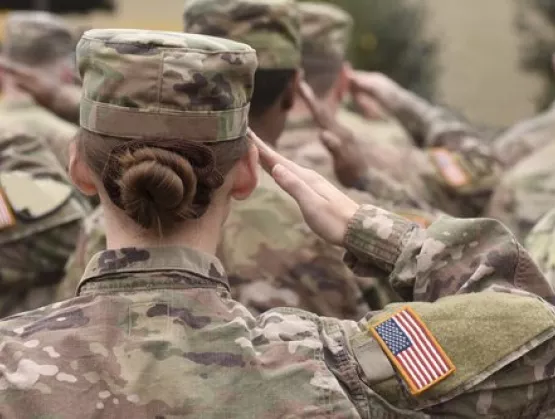
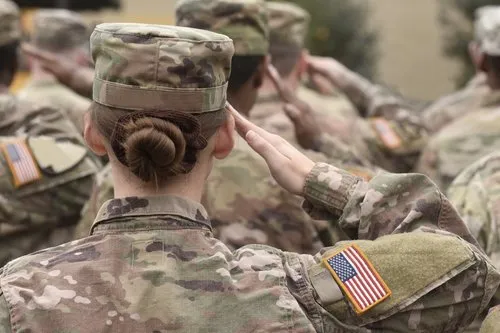
Like TEL, many SEMI member companies have a long history of hiring veterans. We all have done a good job of hiring military personnel who possess the obvious semiconductor industry-related job skills and experience (e.g., avionics, hydraulics, mechanics, and radio frequency (RF)). But as an industry, are we doing enough? Are we missing out on the next employee of the year because we aren’t thinking broadly enough about our workforce? Five years ago, I met a young soldier at a military job fair. The interaction with him was a defining moment for me personally and it inspired me to commit to do more to translate military experience to the civilian workforce. Soldier: “What does TEL do?” Me: (Industry has a bright future, chips are in essentially everything including your military gear, etc.) Soldier: With disappointment, “Well, I don’t suppose I’m qualified to work at your company – since its technology.” Me: “Please stay for another moment, tell me your MOS (Military Occupation Specialty code) and job duties.” Soldier: “Ma’am, I’m a bomb specialist. I disable bombs.” Me: “Okay, let’s see if I get this right. You work with electrical schematics. It’s a given you follow instructions and guidelines, consider safety a p-r-e-t-t-y big deal, work under pressure, and you work with a team. Right?” Soldier: With excitement, “Yes, ma’am. And we have a squadron motto: “We have NO bad days!” Me: “Well then, you have the PERFECT background!” This conversation changed this soldier’s outlook on his career possibilities after exiting the military. He never imagined that the specialized training and experience he received as a bomb specialist would lead him to a role in the high-tech industry. He honestly believed he possessed no value to a civilian employer. It was moving to experience this gap of understanding face-to-face. Yet, this is a typical conversation between recruiters and hiring managers and military members. I could have easily let him walk away. Instead, I chose to invest 10 more minutes to learn more about what this soldier had to offer TEL. What is the key challenge around hiring military veterans? Disconnect. 90% of veterans surveyed faced challenges seeking civilian employment. According to Pew Research Center, only 1% of the entire U.S. population is qualified to join the U.S. military, and .5% (yes, that’s ½ of 1%) serve. This means 99.5% of the U.S. population has no direct working experience with the military. Civilian employers (recruiters, hiring managers, or employees) do not understand what the military does, the technical nature and responsibility of each role, or the extensive training each military member receives. And, veterans do not understand the civilian workspace. We truly have a gap translating military experiences and skills to the civilian workforce and vice versa. What are the benefits hiring military veterans? There are numerous benefits to hiring military veterans. Veterans are well-versed in cutting-edge technology. Today’s military is high-tech, state-of-the-art, and computer-based. Veterans are uniquely matched to our industry. Their jobs are highly technical and soldiers are extremely safety-conscious; they appreciate guidelines, follow directions, and possess a strong sense of team. Veterans are global citizens. Many military veterans have lived and worked in more than one country and speak more than one language. They tend to be culturally astute. Veterans have a winner’s psychology. Military members receive hundreds of hours of professional and technical training. They focus on a higher purpose and win as a team. Veterans practice accountability and leadership. Personal accountability is highly promoted. There is no room for excuses or acceptable reasons for mission failure. Everyone has the opportunity for a leadership role at some level and has modeling of what good leadership looks like. Hiring veterans aid diversity program issues over time. The military is a diverse group with 16% females and 44% people of color. Military personnel come from a wide variety of experiences – from across all 50 U.S. states with a variety of cultural and economic backgrounds. How can SEMI member companies truly effect change? Considering over 200,000 men and women exit the military annually, we have a significant opportunity to effect change by offering careers to those who serve while expanding our industry’s talent pool. Here are some initial ideas to get your company moving towards a more robust military outreach: Participate in the SEMI Foundation’s VetWorks Program: The Foundation is creating a toolkit to help member companies engage, hire, train, and retain veterans. This includes support for veteran-friendly messaging and recruiting, internships, training programs, and job fairs. This work will launch in Q2 of 2021 – contact Margaret Kindling at SEMI for details ([email protected]). Have a smart plan – Determine what positions make sense to focus on for veteran hiring. Start simple and grow your efforts over time. Set metrics for what percentage of your hires will be veterans. Recruiters can use simple key word searches to pull veteran resumes. Your company can attend military job fairs (in person or virtual) either at military installations or hiring events by organizations like Hiring Our Heroes, RecruitMilitary, etc. Offer diversity training related to hiring military veterans that focus on military vs. corporate cultures. Additionally, Society for Human Resources Management (SHRM) Foundation offers a Veterans at Work Certification Program available for all interested participants. Soldier For Life – This is an official U.S. Army program created to help connect current soldiers, retired soldiers, veterans, and their families with education, employment, and health and wellness resources and opportunities. If you are near a military installation, get to know the transition assistance program (TAP) officer or the base commander. You have to be persistent – the relationship will be worth it. Ask your network, including SEMI member companies, if they would share their military installation contacts. This is not a closed talent competition amongst our industry partners. Many companies who have a robust military outreach program are eager to share their stories to help you get started. It is simply the right thing to do to help each other make a difference for those who served. Internships/Mentorships/Fellowships. Ask your local military installation if they offer direct mentorships or internships. A great way to get started with internships is partnering with NAM’S Manufacturing Institute – Heroes MAKE America. Hiring Our Heroes is another great resource for fellowships. Let’s do more for those who served. Interested in starting an industry veteran network to share best practices? Please contact [email protected]. We can do this! Kathy Garner is Manager, Talent Acquisition, Global Mobility, and Contingent Worker Management at TEL. References Bradbard, D. (Institute for Veterans and Military Families, Syracuse University) Schmeling, J. (Student Veterans of America). The Recruitment, Hiring, Retention Engagement of Military Veterans. Retrieved from https://www.shrm.org/foundation/ourwork/initiatives/engaging-and-integrating-military-veterans/pages/veteransguidebook.aspx Parker, K., Cilluffo, A., Stepler, R. 6 Facts about the U.S. Military Changing Demographics. Pew Research Center. Retrieved from https://www.pewresearch.org/fact-tank/2017/04/13/6-facts-about-the-u-s-military-and-its-changing-demographics/ Reynolds, G. Shendruk, A. (2020, July 13). Demographics of the U.S. Military. Council of Foreign Relations. Retrieved from https://www.cfr.org/backgrounder/demographics-us-military Shifting Forward Consulting. Shift to the Civilian SUIT: How Veterans Can Successfully Navigate 3 Job Interview Challenges. (10/17/18). Retrieved from https://cherriedavis.com/veterans-successfully-navigate-3-job-interview-challenges/ SHRM Veteran Panel 2018. Retrieved from https://youtu.be/rgDUAALxTRg SHRM Veteran Panel 2018 Resources Bureau of Labor Statistics https://www.bls.gov/home.htm Heroes MAKE America http://www.themanufacturinginstitute.org/Initiatives/Military-and-Veterans/Heroes-MAKE-America/Heroes-MAKE-America.aspx Hiring Our Heroes https://www.uschamberfoundation.org/hiring-our-heroes Soldier For Life https://soldierforlife.army.mil US Department of Defense https://www.defense.gov/Our-Story/Our-Forces/ USO https://www.uso.org/

Read More
Back in March 2020, at the onset of the spread of COVID-19 in the U.S., SEMI quickly formed an Environment, Health and Safety (EHS) COVID-19 working group made up of EHS professionals who suddenly saw a critical need to share their experiences, validate untested policies, and collaborate on establishing best practices in response to an extraordinary public health crisis. The group, which today numbers 20 member companies, meets regularly to discuss an array of topics that have grown beyond their pressing need to react to a crisis earlier to a longer, more measured view of risk management as coronavirus cases continue to climb worldwide. While themes vary from one meeting to another, the recurring agenda remains the same to address the following topics: Phase approach – How to bring staff back on site Social distancing – How to manage people traffic flow on site Contact tracing – Track exposure to ensure workplace safety Space allocation – Changes to offices, cubicles and conference rooms HVAC systems – Optimizing workplace air flow and improving filtration systems Clean rooms – PPE and distancing protocols Training – Communications approaches to expanding awareness in order to reduce risk of spreading the virus Travel policies – Domestic and international travel guidelines Vaccines – Policies for vaccinating and monitoring personnel Site inspections – Preparing for an eventual increase in inspections from OSHA representatives In April, the SEMI EHS team issued a survey to assess the pandemic preparedness of member companies. Designed by the COVID-19 working group, the survey found that, despite having a pandemic plan in place, many member companies faced a shortage of PPE and sanitization equipment, their most significant challenge at the time. Members also pointed to operational challenges posed by the pandemic and raised questions about how to establish sound policies appropriate for their operations and geographic locations. Today, the SEMI EHS COVID-19 working group is well-established collaborative forum on public guidelines that members see as unclear as they continue to chart their own pandemic policies. With the first tranche of vaccines recently starting to ship in the U.S., the group has turned its attention to vaccine distribution and how companies will encourage employees to be vaccinated. For more information about the SEMI EHS COVID-19 working group or to join the group, please contact the SEMI EHS team at [email protected]. Olivier Corvez is senior manager of Environment, Health, Safety and Sustainability at SEMI.
Read More