downloadGroupGroupnoun_press release_995423_000000 copyGroupnoun_Feed_96767_000000Group 19noun_pictures_1817522_000000Member company iconResource item iconStore item iconGroup 19Group 19noun_Photo_2085192_000000 Copynoun_presentation_2096081_000000Group 19Group Copy 7noun_webinar_692730_000000Path
Skip to main content
Default Banner Image

SEMI News

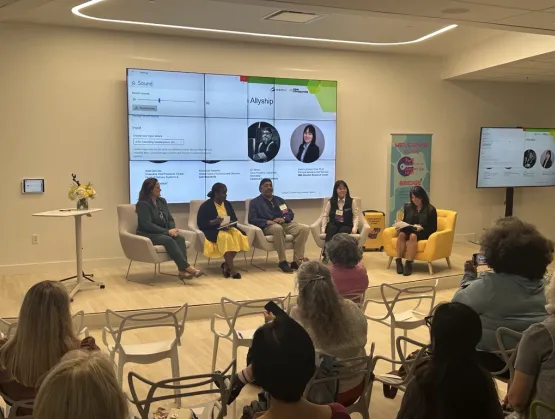
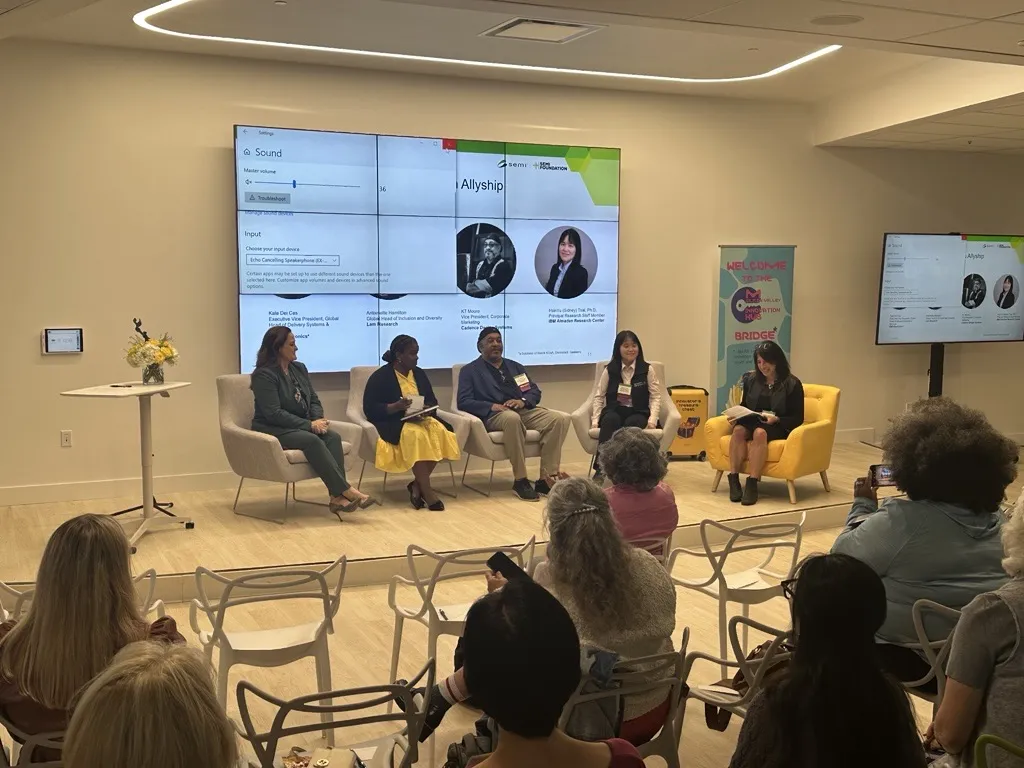
This year, the Women in Semiconductor (WiS) program takes a huge step growing nationally — hosting events in New York, Michigan, Ohio, California, and Arizona. Managed by the SEMI Foundation, the WiS program aims to highlight women’s contributions and leadership in the semiconductor sector and actively address the gender gap to support inclusive workplaces.Over the years, WiS has shifted from an abstract discussion to actionable strategies—focusing on skills like negotiation, strategic decision-making, storytelling, and career advancement. WiS also promotes allyship, inviting and including men to participate as advocates and supporters of women in the industry.Building on the program’s strong momentum, this year highlights the initiative’s growth and impact through expansion across multiple regions – focusing on the theme “Empowerment in Action: Real Strategies for Women’s Success” dedicated toward impactful, actionable programming.The first 2025 WiS program was held in Albany, NY, in conjunction with ASMC on May 8. New WiS programs are scheduled in the following locations:Ann Arbor, Michigan on September 16, 2025Willoughby, Ohio (date to be announced)San Jose, CA on November 20, 2025Phoenix, Arizona on December 11, 2025The WiS is supported by grants from the Kellogg Foundation and the David Lucile Packard Foundation. The programming is also aligned with SEMI Foundation’s Chips Childcare program, which supports childcare-access solutions to strengthen workforce participation—particularly for parents and caregivers. Learn more in our blog: Affordable, Accessible, and Quality Childcare: A Critical Workforce Development Strategy for the Semiconductor Industry.The WiS initiative has evolved into a powerful platform that blends strategic programming, mentorship, allyship, regionally accessible events, and support systems like childcare advocacy. It’s an inspiring example of how consistent focus and innovation can build meaningful change over nearly a decade. If you’re interested in getting involved, contact Bia Hamed at [email protected]. Bia Hamed, Ph.D., is Program Manager for Global Education Initiatives at the SEMI Foundation, focusing on educational programming that supports workforce pipeline building nationally and internationally.
Read More
As the Department of Commerce explores options to adjust patent fees, these changes will have important implications for the semiconductor industry, where thousands of patents are filed each year to protect groundbreaking technologies. At SEMI, we understand the complexity of getting this right for our member companies. The fee proposal is not only about rates, but also about how fees are structured, applied across different types of filers, and administered in practice. Designing a system that is fair and workable is a significant challenge and one that requires close collaboration between government and industry. The SEMI Global Advocacy team is consistently engaged with the Trump Administration and Congress as a resource. We want to ensure the unique needs of the semiconductor sector are understood and that any adjustments to the fee schedule strengthen U.S. innovation without creating unintended barriers. By working together, SEMI members with U.S. operations can help shape an approach that supports the U.S. Patent and Trademark Office's mission and U.S. competitiveness. Next Steps: SEMI will continue to provide technical insight from across our membership as this process develops and looks forward to partnering with policymakers. We will also share updates as information on new patent fees become available beyond the initial reporting by the Wall Street Journal and other news outlets.Visit SEMI Global Advocacy to learn more about public policy efforts and developments as well as how your company or organization can get involved.Scarlett Bickerton, Manager, Federal State Affairs at SEMI.
Read More
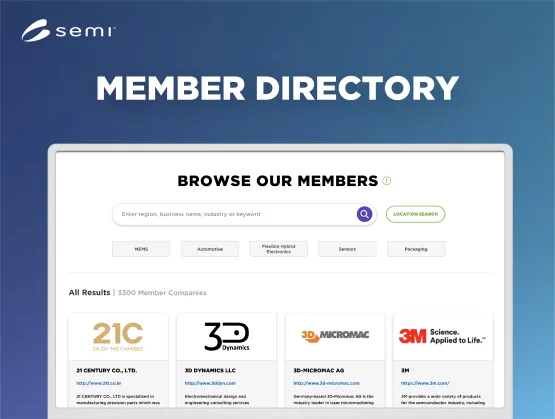
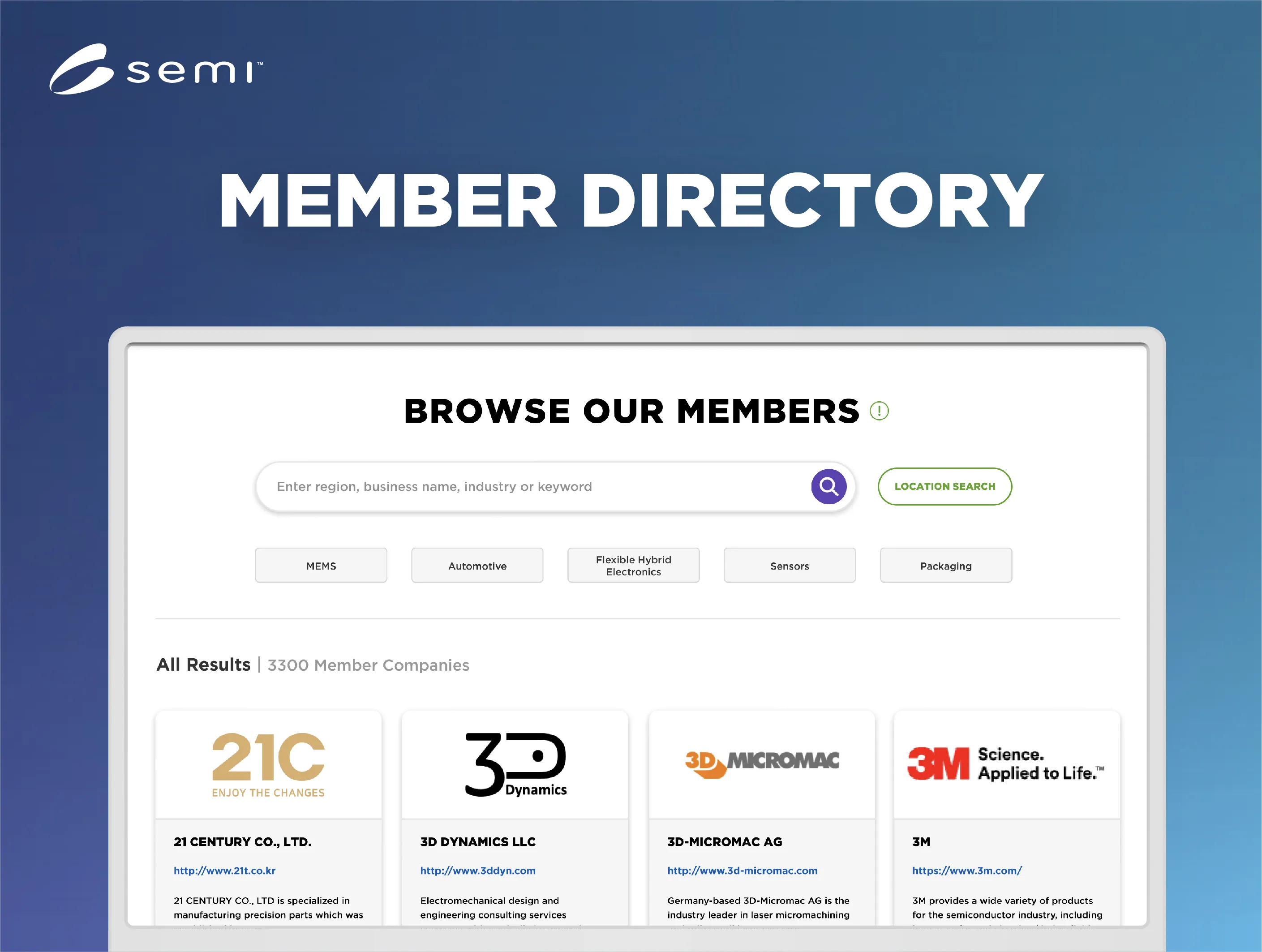
SEMI members span the entire semiconductor manufacturing supply chain, representing diverse industry segments, product offerings, geographic regions, company sizes, and ownership types. The SEMI Member Directory serves as a key resource that showcases companies across the microelectronics value chain while helping to amplify their brands. We’re excited to announce recent enhancements to our member directory that include a refreshed design, improved search functionality, and more up-to-date company information.WHAT’S NEWClean Look FeelDefault “tile view” display of member companiesCompany profile pages with English and optional local-language contentAbility to display up to 48 companies per page viewSmart Search Functionality Searches scan all company profile descriptions, keywords, and location detailsSearches support all languagesIndustry-focused results limited to the semiconductor manufacturing supply chainMember Company Access Primary member contact can instantly update their company’s directory information, including:Business overviewCompany logo uploadAdditional search keywordsWHY IT MATTERSThe Member Directory averages 15,000-20,000 active viewers each month, providing a powerful platform to boost your company’s visibility within the industry. Combined with SEMI’s reputation and reach, it’s an effective way to be seen by the right audience.LOOKING AHEADWe’re not done yet. SEMI will continue to improve and enhance the directory with additional upgrades in the coming months. Check out the new directory and see the latest improvements. If your organization isn’t yet among our 3,000+ member companies, now is the perfect time to join our global community. Learn more by submitting a membership inquiry form or contact a regional office.Eric Thoe is Senior Director, Member Services at SEMI.
Read More
“In today's ever-evolving professional landscape, empowering women and fostering their success is not just necessary—it's essential," said Caryn Veach, a long-time Women in Semiconductors (WiS) committee member. Veach is a strategic account manager at Kokusai Electric Corporation, which sponsored the WiS program in Albany, New York in May. Additional sponsors included Axcelis, Energetiq (a Hamamatsu Company), IBM, Nikon Precision and Onto Innovation.This year’s WiS theme, "Empowerment in Action: Real Strategies for Women’s Success," was designed to provide all attendees with actionable strategies to support women's career growth and representation, as well as lead to greater talent retention and workforce stability. The program, which was open to everyone at the co-located SEMI Advanced Semiconductor Manufacturing Conference, was co-chaired by Joy Racowski, PhD., Strategic Account Sales Engineering Manager - Delivery Systems Services at EMD Electronics and Rosanna Robert, ES Process Engineer ll at TEL Technology Center America.Keynote speaker Jennifer Lynn, Cybersecurity Leader and Research Security Program Manager at IBM Semiconductors emphasized the significance of community in driving change. She stressed the role of Employee Resource Groups (ERGs) as a collective voice to advocate for safer and welcoming workspaces where all individuals feel respected and valued. Some key takeaways from Lynn’s address: champion supportive career initiatives, become a mentor or find a mentor, and be an ally in support of peer success. Shari Liss, Vice President of Global Workforce Development and Initiatives at SEMI, moderated a panel which also highlighted real strategies for women’s success. Panelists from EMD Electronics, Entegris, TEL Technology Center of America and University at Albany focused on actionable strategies which everyone, not only women, can implement to navigate corporate environments. They encouraged WiS participants to challenge norms which penalize specific employees. Panelists invited attendees to discover and embrace what makes them unique and use that as a strength for themselves as well as others. (l-r) WiS panel: Shari Liss, SEMI; Jennifer Braggin, Director, Technology, Office of the CTO, Entegris; Daniel Drellich, Managing Director Sr. Vice President of Business Partnering, EMD Electronics; Kathleen Dunn, PhD, Professor of Nanoscale Science and Engineering, University at Albany; Alex Oscilowski, President, TEL Technology Center AmericaImposter Syndrome is a common challenge to women and those who are new in their career or leadership role. Panelists advised everyone to push through it and support others who might feel this way. Assertiveness is an area which should be seen as a strength rather than a disadvantage, especially for women; it’s important that different voices and opinions are heard. Finally, panelists urged everyone to give credit where it is due and actively support team members and peers.The program concluded with an interactive workshop facilitated by Debbie Gustafson, CEO of Energetiq Technology. Attendees were invited to craft an elevator pitch which could be used when networking or applying for a new job or position. Common elements of a pitch include a concise description of oneself, a unique value proposition and a call to action for one’s audience or employer. WiS was an empowering experience with excellent opportunities to network with female business leaders from around the country as well as recent college graduates and industry professionals from major semiconductor manufacturers. There is something uniquely impactful about coming together with other women and peers who understand the challenges and opportunities of our industry. These events create space for honest conversations, meaningful networking, and a sense of community. It is a reminder that that together we can drive change and support one another in powerful ways. Through grants from the W.K. Kellogg Foundation and the David Lucille Packard Foundation, the SEMI Foundation is expanding Women in Semiconductors programming to several regions around the country. In addition to an event in San Jose, California there will be programs in Arizona, Michigan and Ohio in the second half of 2025. For information on WiS in Michigan, visit https://semiscan.org/event/women-in-semiconductors/.Empowering women in the workplace requires persistent effort and community support. By embracing these strategies and advocating for necessary changes, organizations can pave the way for a more equitable future. And just like the Kokusai Electric embrace of Tai-wa, a Japanese word meaning "synergistic discourse", WiS encourages face-to-face conversations and a willingness to understand others with a sense of empathy and respect for everyone.Margaret Kindling is Senior Program Manager at the SEMI Foundation. She has promoted inclusive workplaces via initiatives like WiS, Semiconductor PRIDE and workforce development programming at SEMICON West, SEMICON India and SEMIEXPO Heartland. After a combined 37 years at SEMI and the SEMI Foundation, she will be retiring in August 2025.
Read More
The SEMI Foundation is undertaking a bold, novel approach to ensuring that the semiconductor industry has the skilled talent it needs to thrive. With a $40 million initial award from the U.S. National Science Foundation together with the U.S. Department of Commerce, and up to $160 million additional funds over the next five years, we have launched the National Network for Microelectronics Education (NNME), which is designed to reshape the landscape of microelectronics education and industry career awareness. The NNME is a federal effort to develop, connect and multiply workforce development activities throughout the nation to meet the needs of the semiconductor industry. The SEMI Foundation now serves as the Operating Hub of the NNME and will support large, multi-state regional coalitions of workforce development performers, called Regional Nodes. Collectively, the Hub and the Nodes will work to transform semiconductor industry training and awareness to provide pathways toward economic opportunity for American workers, and to provide industry the workforce it needs to grow to $1 trillion by the early 2030s.Join the NNMEOn July 16, 2025, we will begin accepting Letters of Interest (LOI) from institutions interested in leading or joining a Regional Node. Read on and visit www.nnme.org for more details.The ChallengeThe semiconductor industry has layered workforce development challenges, including: Greying workforce, with 30% of our workers over 50Aging infrastructure and a significant instructor shortageMicroelectronics curriculum that is often outdated and not aligned with industry needs, leading to critical gaps in learner knowledgeNo standardization of microelectronics learning across the fieldDuplicative and disconnected educational efforts nation-wideAn industry largely invisible to many students and jobseekersThe new industry investments spurred by the CHIPS and Science Act mean tremendous economic opportunity for more workers, bolstered American manufacturing, and a stronger U.S. microelectronics sector. None of this can be fully realized without a much larger and highly skilled workforce trained in today’s and tomorrow’s technologies.There have been numerous local, state, and federal workforce development initiatives to address some of these issues, and highly successful programs in various regions; but these have never been connected in a systemic way. This means people and institutions across the country are working separately to solve a collective problem. The NNME will connect and support these efforts, facilitate cross-regional learning, and braid together resources to illuminate the industry to students and jobseekers nationwide.The Solution“Talent is infrastructure,” said Shari Liss, Vice President of Global Workforce Development and Initiatives of SEMI. “We need skilled and job-ready talent at all educational levels to power the semiconductor industry. We have been working for years with educational and workforce leaders to design this national collective effort and we are thrilled to finally launch this transformative work.”The NNME is designed not as a series of isolated interventions, but as a cohesive, forward-looking national strategy. Grounded in the realities of a high-growth industry and an underprepared workforce system, NNME’s goals respond directly to the needs expressed by semiconductor employers, policymakers, educators, and learners. The NNME will:Design, develop, modernize, and disseminate industry-aligned curricula and share best practices across the networkDevelop regional partnerships and local workforce pipelines including colleges, universities, workforce development programs, labor, community-based organizations, and industry to create a national technical workforce that meets the evolving needs of industryFacilitate apprenticeships, internships, and other applied learning experiencesBuild, host, and update an open-source digital portal that houses the updated industry-aligned curricula for adoption in training programs nationwideConduct a major industry awareness, microelectronics education, and career opportunity campaign including PreK-12 schools and STEM organizationsThe NNME will be comprised of the Coordinating Hub (operated by the SEMI Foundation) and Regional Nodes which will be funded by the Hub. Regional Nodes will be comprised of workforce development performers – industry members, academic institutions, training providers, community-based organizations, and more. Collectively, the Hub and Nodes will execute the above activities with a commitment to information sharing and collaboration, transparency, responsiveness and agility, excellence, and accountability. Finally, the NNME is committed to expanding access to microelectronics careers for Americans from every region and walk of life. NNME initiatives are designed to open doors to technical training and career exploration for high school students, veterans, people returning to work, college students, and others seeking high-quality jobs in this critical industry, as well as provide opportunities for current professionals looking to grow their careers. Call for ParticipationThe SEMI Foundation is soliciting LOIs for performers interested in leading or joining a Regional Node. Information on node requirements and performer eligibility can be found on the NNME website at www.nnme.org. The solicitation goes live on Wednesday, July 16. An informational webinar will be held on Wednesday, July 23, and LOIs will be due on Friday, August 8 at 5 p.m. EDT. The NNME envisions a future in which every American, regardless of where they live or how they start their journey, can pursue a rewarding, well-paying career in microelectronics. The NNME will be instrumental in helping to build a robust and vibrant semiconductor industry by fueling it with a wide range of skilled workers and creating a broad pipeline of future talent. Our intention is to serve as the nation's premier resource for microelectronics education and training, connecting learners to employers, programs to successful outcomes, and empowerment to opportunity. We invite industry members and other workforce partners to join us in this work. Together, we will strengthen the talent pipeline that powers American leadership in semiconductors and advanced manufacturing. For more information, contact us at [email protected] or visit www.nnme.org. Michelle Williams is Executive Director at the SEMI Foundation.

Read More
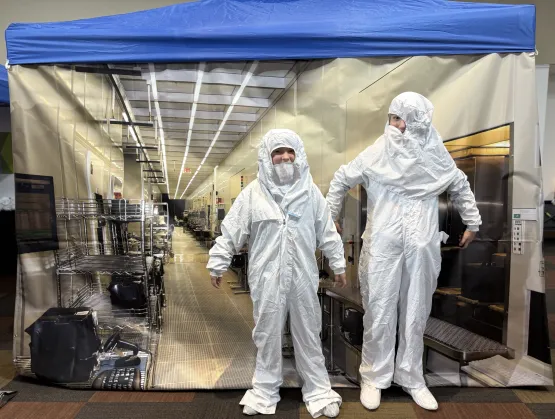
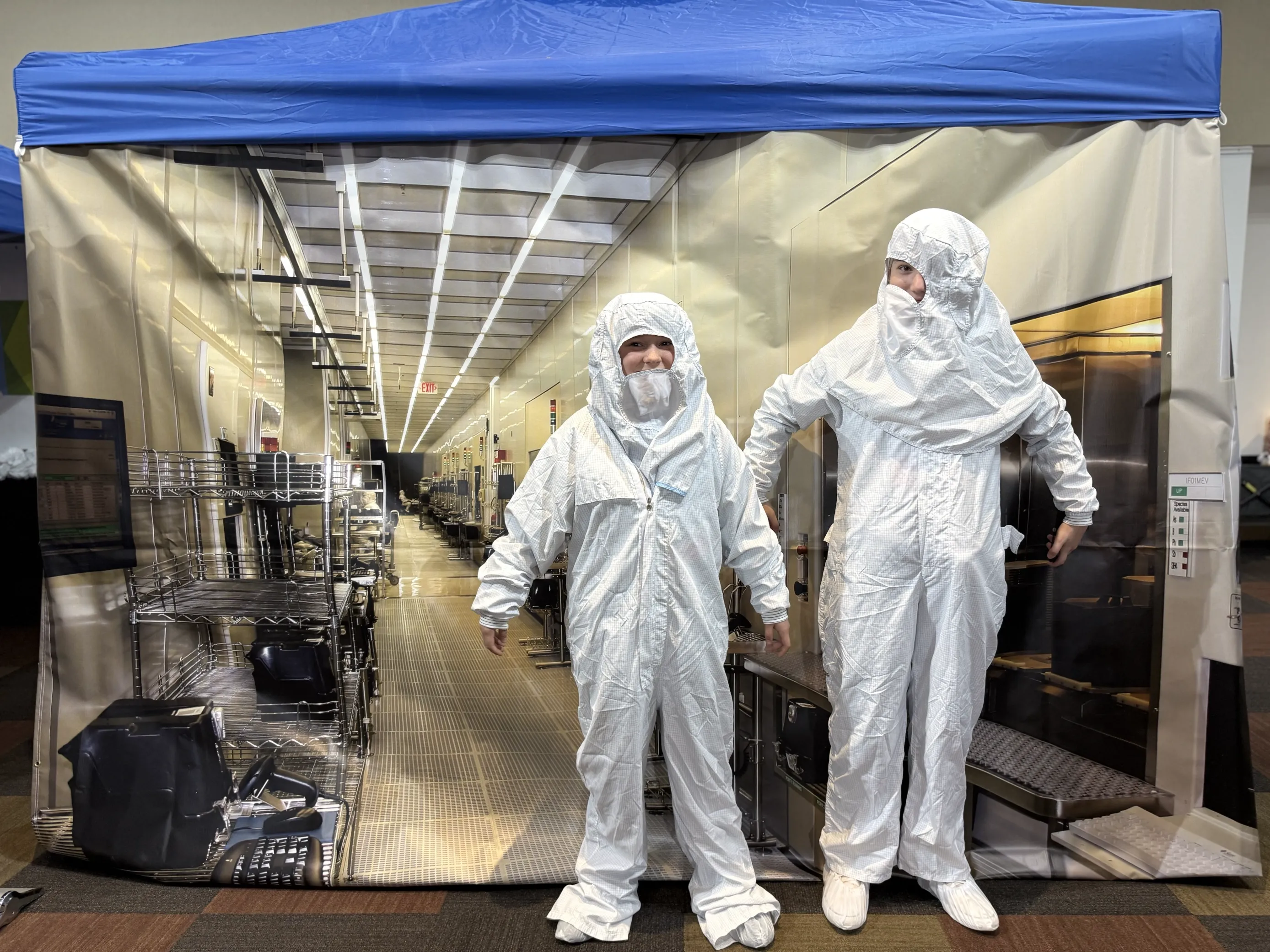
The future of technology depends on cultivating a strong and skilled talent pipeline. According to McKinsey Company, the global semiconductor industry could grow to $1 trillion by 2030, driven by surging demand across sectors like automotive, consumer electronics, AI, and clean energy technologies. That’s why the SEMIquest Pop-Up Exhibition at SEMICON West, October 8-9, 2025 in Phoenix, AZ, will bring the semiconductor story to life through immersive, hands-on learning experiences for students, educators, families, and the general public.What Is SEMIquest? SEMIquest is an engaging, interactive experience designed to introduce students in grades 7-12 to the world of semiconductors. The program features hands-on activities, direct interaction with industry professionals, and workshops for educators aimed at highlighting the essential role semiconductors play in everyday life and future career opportunities. Key Program Components:Students trying on NXP bunny suits at Semiconductor Adventure DayIndustry Engagement – Offering students the opportunity to interact with industry through the interactive exhibition space.Hands-On Activities – Highlighting careers in semiconductors and promoting STEM education for students.Educator Engagement – Offering teachers training and resources to carry lessons back into their classrooms.Field Trip to SEMICON West 2025 – Providing students an opportunity to attend SEMICON West 2025 at the Phoenix Convention Center in Arizona, with complimentary admission and curated tours that offer a behind-the-scenes look at the global semiconductor industry.Students from ASU Preparatory Poly Tech Campus Participating in Semiconductor Adventure Day and event led by the Semi Foundation and ASU PreparatoryThe program culminates in an on-site learning experience at the Arizona Science Center, located adjacent to SEMICON West 2025—where students can explore exhibits, engage with companies, and witness the semiconductor ecosystem firsthand.Projected Reach: In its inaugural year, SEMquest aims to engage 500-1000 students in grades 7-12, with a national expansion plan already in motion.Impact Goal: Reach 60,000 families and students during a 4-month Pop-Up exhibition in Arizona through targeted programming and outreach.Why This Work Matters: The Semiconductor Industry Needs TalentSemiconductors are the foundation of modern life—from smartphones to satellites, healthcare tech to AI applications, and more. Yet, many students are unaware of what semiconductors are or how to pursue a career in the field.The Semiconductor Industry Association (SIA) estimates the U.S. could see a shortfall of 67,000 skilled workers by 2030 in key roles that require postsecondary education.A 2023 Deloitte report warns of a global shortfall of 1 million skilled workers in the semiconductor industry by 2030 if proactive steps aren’t taken.Semiconductor Research Corporation 2023 findings indicate that while 577,000 students pursue four-year STEM degrees annually, only about 19,000 enter the semiconductor industry each year. This disparity underscores a significant gap between STEM education and semiconductor industry employment.SEMI's American Semiconductor Academy (ASA) Vision Paper highlights the importance of raising student awareness through educational and industry collaboration, offering hands-on experiences and real-world applications.Image Source: Photo courtesy of SRC (Semiconductor Research Corporation).The SEMIquest Pop-Up Exhibition tackle this urgent gap through meaningful engagement, accessibility, and experiential learning—helping students envision themselves as future leaders in the field.What Sets SEMIquest ApartReal Industry Involvement – Students interact directly with professionals, tools, and environments used in the field.National Scalability – While beginning in Arizona, the program is structured for national rollout.Cross-Sector Collaboration – A unique fusion of education and industry.Integrated Learning Model – Teachers and students learn together, amplifying classroom impact.Join the Movement: Shape the Future of InnovationWe’re calling on partners across the country to join this work. Whether you’re an industry leader, educator, or community-based organization, your involvement is essential to inspiring and preparing the next generation of innovators.Industry Partners – Showcase your work, engage directly with students, and contribute resources to the traveling Semiconductor Pop-Up Exhibition.Schools Educators – Bring your students, co-host hands-on workshops, and integrate real-world tech experiences into your curriculum.Foundations Funders – Support the expansion of this scalable model and help bring it to communities nationwide.Join us at SEMIQuest! To get involved or learn more, contact Perla DeBaggis at [email protected]. Perla DeBaggis is Sr. Specialist, Career Industry Awareness at the SEMI Foundation.
Read More
On July 7, President Trump issued an executive order (EO) extending the ten percent baseline tariff rate through August 1, 2025. In addition, the EO suspends the variable "reciprocal" tariffs imposed under the International Emergency Economic Powers Act (IEEPA) until August 1. The order applies to nearly all countries except Mexico, Canada, and China. These changes do not impact separate reciprocal tariff actions on China or alter existing Section 232 measures on steel, aluminum, autos, and their derivative products. At the time of this posting, letters had been sent to 20 trading partners outlining expected tariff rates if no agreement is reached by August 1; bilateral negotiations are ongoing. Eleven of the 21 countries received rate cuts compared to the "Liberation Day" announcements on April 2, ranging from one to 13 percent. President Trump indicated rates could rise around 25 percent if trading partners retaliate. Next Steps: The extension offers short-term stability for SEMI member companies to assess supply chain exposure. SEMI continues to monitor bilateral trade and tariff policy negotiations, including for discussion related to the semiconductor supply chain. We aim to keep member companies informed of relevant tariff escalations. If your company is directly impacted by a country-specific rate shift, please reach out to your region’s SEMI Global Advocacy contact with any feedback on how these tariffs are affecting your operations.Visit SEMI Global Advocacy to learn more about public policy efforts and developments as well as how your company or organization can get involved.Scarlett Bickerton, Manager, Federal State Affairs at SEMI.
Read More
In a letter sent to the United States Congress, SEMI, the leading industry association serving the global electronics design and manufacturing supply chain, and 16 member companies urged Congress include in reconciliation an expansion and extension of the Advanced Manufacturing Investment Tax Credit. The letter calls for the expansion of eligibility for the federal investment tax credit (ITC) to make the entire semiconductor manufacturing supply chain, as well as R D and design expenditures eligible for the ITC and extend the credit beyond the current 2026 expiration date—to allow sufficient time to plan and execute investments. The U.S. semiconductor market is growing to meet the needs of critical technology applications like artificial intelligence (AI), telecommunications, and bioengineering that rely on semiconductors. That growth requires increased investment for upstream materials, chemicals, and electronic design automation (EDA), which are currently excluded from receiving the tax credit (also known as Sec. 48D). Excluding these critical manufacturing and R D projects undermines domestic investment efforts potentially ceding U.S. leadership and competitiveness. Semiconductor infrastructure requires billions of dollars in upfront investment, and tax incentives are essential to help offset these exorbitant costs. A competitive tax environment encourages semiconductor companies to invest in the U.S., strengthening domestic manufacturing and innovation while helping the U.S. meet its goals of maintaining global leadership with lower-cost regions also providing incentives.Also, the credit expires at the end of 2026, leaving insufficient planning and implementation time for the billions in upfront investment required to support semiconductor infrastructure in the United States. To support the success, growth, and innovation of the U.S. semiconductor ecosystem, SEMI and its members urge Congress to include in the reconciliation package:Expansion of the Sec. 48D tax credit for the entire supply chain—as included in the SEMI Investment Act (S. 1642)Extension of the credit to allow enough time for businesses to plan and execute needed investments as included in the BASIC Act (H.R. 3204)Recognition of R D and design expenditures as eligible Sec. 48D projects as included in the STAR Act (H.R. 802)These inclusions are crucial to maintain U.S. competitiveness in attracting global semiconductor industry investments.The letter was signed by CEOs or presidents of the following leading companies: SEMI; ASML; ASM; Advantest America, Inc.; Axcelis Technologies Inc.; Brewer Science; Chemours; Dupont’s Electronics business, and Qnity™; Entegris; Evatec NA, Inc.; EFC Gases Advanced Materials; GlobalWafers Co., Ltd.; Lam Research Corporation; Micron Technology; Tokyo Electron America, Inc. TEL Manufacturing and Engineering of America, Inc.; SACHEM, Inc.; SkyWater Technology.Visit SEMI Global Advocacy to learn more about public policy efforts and developments as well as how your company or organization can get involved.Christina Banoub, Senior Manager, Federal Affairs at SEMI.
Read More
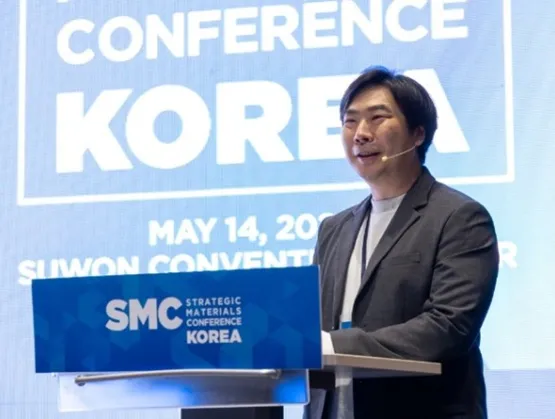
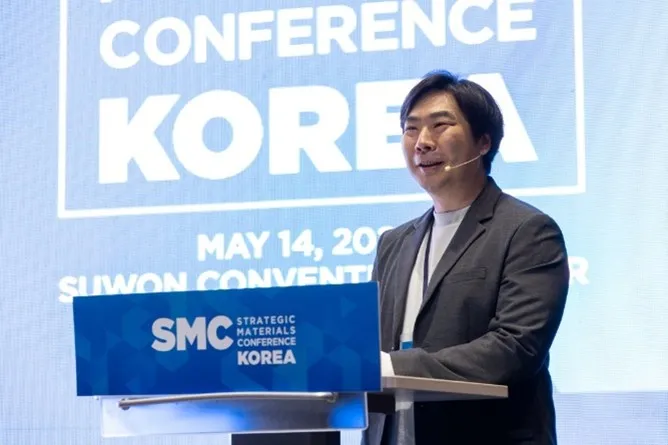
Driven by the recovery of the overall semiconductor market and rising demand for advanced materials for high-performance computing (HPC) and high-bandwidth memory (HBM) manufacturing, global semiconductor materials revenue rose 3.8% year-over-year in 2024. At the heart of this momentum, Strategic Materials Conference (SMC) Korea 2025 brought together approximately 300 industry leaders on May 14 to discuss bold innovation roadmaps and the evolving challenges of the new AI-driven era.Celebrating its 10th edition, SMC Korea served as a convergence point for leaders across the semiconductor ecosystem—including materials suppliers, equipment manufacturers, chipmakers, and academia.“This year’s SMC Korea has recorded the highest level of Q A engagement. A full hour was dedicated solely to an audience-driven panel discussion, where questions ranged from materials technology and business to semiconductor process roadmaps and market outlook. The depth and interactivity of the dialogue reflected the standards of leading technical conferences. Some attendees even noted that it surpassed any academic or industry symposium currently held in Korea,” said Oh Kim, Co-chair of the EMG Korea Chapter and representative of Air Liquide Solutions Korea.Exploring Next-Gen Technologies: 3D DRAM and CFETThe first session focused on next-generation semiconductor technologies, highlighting the future of materials and processes for 3D DRAM and Complementary FET (CFET) devices.Dr. SukKoo Hong, Head of the Material Development team at Samsung Electronics, kicked off the session by outlining a roadmap for materials innovation in 3D DRAM and CFET. Dr. Hong emphasized key technical challenges in the development of 3D DRAM and CFET, highlighting the need for continued innovation in process integration and material engineering. Building on this, Dr. Hong stressed the increasing complexity of material processes and the critical need for tight cross-industry collaboration.Dr. Inhee Lee, Director of imec’s Active Memory Program, highlighted the diminishing improvements in DRAM scaling and emphasized the urgent need for new high-k materials to enable higher density in next-generation 3D DRAM and 4F² DRAM architectures. Dr. Lee emphasized the need for further validation on performance shifts and data retention time resulting from changes in channel materials and architectures.Professor Changhwan Choi of Hanyang University presented key material and process trends for CFET devices, focusing on monolithic and sequential integration as well as Backside Power Delivery Network BSPDN) technologies.The session also featured a presentation by Linghzhi Zhang, Director of Product Management at Air Liquide Advanced Materials focused on “Si, Ge, B Hydrides for Next Generation Semiconductor Devices – Challenges and Perspectives.”The Future of Semiconductor Materials: Market Trends and Innovation StrategiesThe second session highlighted semiconductor materials from multiple perspectives, including market outlooks, advanced technology solutions, and strategic responses to industry challenges.Dr. Prayudi Lianto, Technology Manager at Applied Materials, discussed the technical barriers currently facing HBM, particularly the stacking height limitations. Dr. Lianto highlighted the importance of advanced packaging technologies such as through-silicon via (TSV) and hybrid bonding, and emphasized the critical role of material innovations. Key challenges include void formation during TSV gapfill and developing robust bonding strength and interfacial metals for low-temperature hybrid bonding.Andy Tuan of Linx Consulting provided a market outlook centered on macroeconomic shifts and evolving supply chain structures. Tuan noted that while the semiconductor industry is undergoing a short-term correction, the materials market continues to grow steadily—driven by 300mm logic, DRAM, and 3D NAND. Tuan projected that demand for process materials such as lithography, deposition, and CMP will see a notable recovery post-2025.Dr. Deoksin Kil, Senior Fellow at SK hynix, underscored the growing significance of advanced process materials—including high-performance photoresists, functional chemicals, and CMP slurries—as enablers of semiconductor scaling and 3D evolution. Dr. Kil also stressed the need to maintain consistent quality and supply chain resilience, while pursuing sustainability through low-GWP gases and PFAS-free materials.The session also featured the following presentations:Yohan Ahn, Senior Director, Entegris: “Technological Trends and Necessity of Material Contamination and Filtration for Wafer Defectivity Control in HBM Manufacturing”Dr. Mikko Utriainen, Chipmetrics: “Advancing ALD Tool Qualification Using Ultra-High-Aspect-Ratio Test Structures”SEMI Korea extends its gratitude to all SMC Korea 2025 sponsors for making this insightful conference possible. Dongwoo Fine-chemJSR Electronic Materials KoreaHuntsman Performance ProductsUP ChemicalDuPont Electronics IndustrialDongjin SemichemSK trichemTEMCEntegrisAir Liquide Solutions KoreaJaegwan Shim is Senior Specialist, Marketing at SEMI.
Read More
May is Military Appreciation Month, a time to honor the service and sacrifice of those who’ve worn the uniform — and their families who’ve served alongside them. At SEMI, we believe this recognition must extend beyond appreciation. It should be a commitment to opportunity, support, and action.Through the SEMI VetWorks program, we help transitioning service members, veterans, and military spouses access high-growth careers in the semiconductor and microelectronics industry. We also provide our member companies with the tools and resources they need to successfully recruit, hire, and retain military-connected talent. This Military Appreciation Month, we’re calling on SEMI members to take action — not just in May, but year-round.What SEMI VetWorks OffersVetWorks is more than a program — it’s a network of opportunity that helps bridge the transition from military service to civilian careers. Here’s how we support both job seekers and employers:SEMI VetWorks Guide for EmployersThis guide helps companies understand military experience, translate skills, and develop inclusive hiring strategies that resonate with veterans and military spouses.Monthly Military Resume ReleasesEach month, SEMI VetWorks distributes a curated list of resumes from transitioning service members and military spouses to participating member companies. This direct pipeline provides early access to mission-ready talent.Perla DeBaggis and Melinda Gomez of the SEMI Foundation at Luke AFB Military Hiring EventMilitary Engagement EventsVetWorks hosts and joins industry-specific hiring events, career fairs, and workforce development briefings that connect member companies directly with military-affiliated candidates.careers.semi.org/militaryThis dedicated career portal is designed for veterans and spouses exploring semiconductor industry jobs. It features training resources, employer spotlights, and a streamlined job search experience tailored to the military community.Our Strategic PartnershipsVetWorks also partners with organizations that share our mission to support veterans and military spouses. Together, we provide critical services, from career coaching to job placement and certification programs. These include:Department of Labor’s Employment Navigator Partnership Program (ENPP)We work closely with DOL Navigators who refer transitioning service members to SEMI for career coaching and connection to job opportunities.Marvin Branch of Heroes MAKE America, Melinda Gomez of SEMI VetWorks and Eric Putt of Hiring Our Heroes at Ft Cavazos Semiconductor Information Session Hiring Our Heroes (U.S. Chamber of Commerce Foundation)A national initiative that SEMI VetWorks supports through event participation and career pathway promotion in the semiconductor industry.Heroes MAKE America (Manufacturing Institute)Prepares veterans for advanced manufacturing roles with hands-on training, certifications, and job placement support.NYCREATES Vet S.T.E.P.A New York-based program offering veterans specialized training and certifications for semiconductor manufacturing roles.DOD Military Spouse Employment Partnership (MSEP)Connects military spouses with employment opportunities that offer flexibility and long-term career growth.What SEMI Members Can Do NowSupporting the military community is not only the right thing to do — it’s a strategic investment in a dedicated, adaptable, and highly skilled workforce. Here are five actionable ways your company can get involved:Use the VetWorks Guide to educate HR and hiring managers on how to evaluate military experience.Sign up for our Monthly Resume Release to receive vetted candidates directly from our pipeline.Participate in Military Engagement Events to connect with transitioning service members and spouses.Establish internal support systems, such as military-affiliated Employee Resource Groups (ERGs) or mentorship programs.Review and adjust your benefits policies to better support reservists, National Guard members, and military families (e.g., flexible leave, relocation support, remote work options).These actions not only improve veteran and spouse recruitment — they strengthen your organization’s culture, resilience, and brand reputation.Join Us in Building the FutureThis Military Appreciation Month, we honor those who have served by building pathways for them to thrive in our industry. Through SEMI VetWorks, we’re proud to create those pathways — but we can’t do it without you.Get started today:Visit semi.org/veteransExplore our military to semi careers portalReach out to Melinda Gomez ([email protected]) with the SEMI VetWorks team to learn how your company can get involvedLet’s turn appreciation into action — and build a stronger, more inclusive industry together.Melinda Gomez is Program Manager, Veteran Initiatives at the SEMI Foundation.

Read More