Advanced Semiconductor Technology Conference (ASTC) is supported through corporate sponsorship. Be recognized as part of the key players to this event that bridge the industry, leading the congregation of leaders and technologists to drive new development and adoption enabling advanced manufacturing landscapes.
Please contact our sales team for more information on Sponsorships.
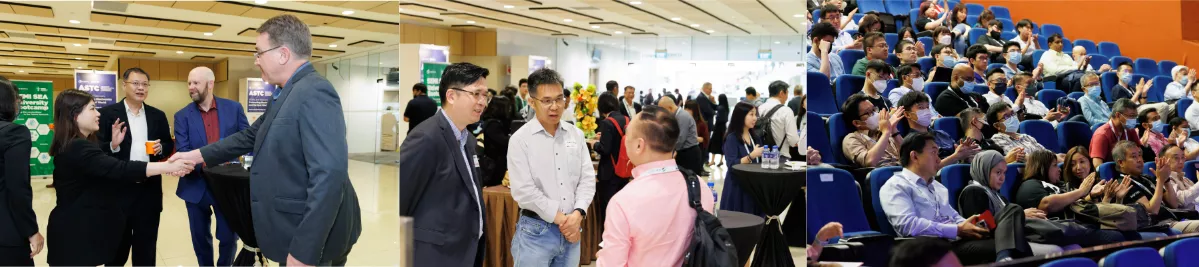
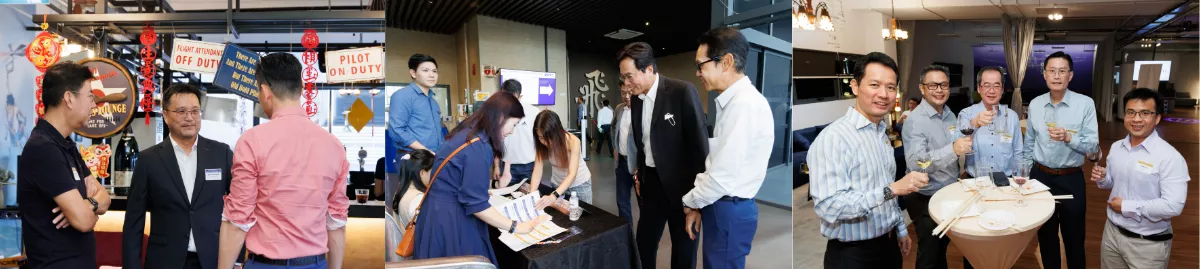
New sensor technologies enabling dramatically reduced size, weight, power, and cost are creating exciting opportunities for future applications. ASTC 2023 presents to you a conference and exhibition that gathers companies, industry leaders, semiconductor experts, and academia to help gain insights on the latest development and trends, as well as challenges in design, manufacturing, integration, and applications. Visit the exhibition booths to find out the latest technologies, products, services, and solutions.
ITE College Central Theatre@illuminITE College Central, Level 2 Blk A 2 Ang Mo Kio Drive 567720 Singapore
17 Jan 2023 (Day 1)
8:30 am
Registration @ Theatre@illuminITE at 2nd Floor
9:30 am
Singapore Electronics Week Opening, Arrival of GoH: Minister Gan Siow Huang, Minister of State, Ministry of Education and Ministry of Manpower
at Tay Eng Soon Convention Centre 4th Floor
9:40 am
Welcome Speech by Ms Low Khah Gek, CEO of ITE
at Tay Eng Soon Convention Centre 4th Floor
9:50 am
Opening Address by Ms Jennifer Teong, Chairman of SSIA
at Tay Eng Soon Convention Centre 4th Floor
10:00 am
Launching of Semiconductor Active Youth (SAY) Ambassador Program
at Tay Eng Soon Convention Centre 4th Floor
10:15 am
Signing of MOU between SSIA and ITE
at Tay Eng Soon Convention Centre 4th Floor
10:20 am
Tea Break | Networking
at Tay Eng Soon Convention Centre 4th Floor
10:45 am
Semiconductors: The "Intelligent Steel of the 21st Century" | Mr. Francois Guibert | Former EVP and President | STMicroelectronics Greater China and South Asia
at Tay Eng Soon Convention Centre 4th Floor
11:20 am
Panel Discussion: Why the Electronics Sector is still a Beacon of Light?
at Tay Eng Soon Convention Centre 4th Floor
Moderator:
Mr. Chan Si En | Process Support Engineer | Applied Materials
Panelists:
Mr. Goh Ru Gene | Senior Director | AMD
Mr. Foo Kuo Yang | HR Director | STMicroelectronics
Prof. Kelvin Fong Xuanyao | National University of Singapore
Mr. Teo Zhi Sen | Student | National University of Singapore
12:00 pm
Networking Lunch
at Theatre@illuminITE College Central, 2nd Floor
12:30 pm
ASTC Registration
at Theatre@illuminITE College Central, 2nd Floor
1:05 pm
SEMI SEA Regional Advisory Board Member
Dr. John Nelson
President & CEO
UTAC
Welcome Address
1:15 pm
SEMI SEA Regional Advisory Board Member
Mr. Terence Gan
Executive Director
A*Star: Institute of Microelectronics (IME)
Opening Keynote
1:30 pm
Presentation of SEMI-MSIG Global Emerging Young Leader Award
1:35 pm
Dr. Tim Brosnihan
Executive Director
MSIG
MEMS Market Outlook and MEMS & Sensors Industry Group update
1:55 pm
Prof. Vincent Lee
Associate Professor
National University of Singapore
AI-Enhanced Sensors - Leveraging the Cloud Computing Towards AIoT Enabled Smart Home, Digital Twin and Metaverse Applications
2:15 pm
Dr. Piotr Kropelnicki
Vice President of Engineering and Founding Member
Meridian Innovation
Thermal Imaging Using a CMOS Compatible, Hybrid MEMS Structure
2:35 pm
Dr. Wu Jie
Head of Application Engineering
Henkel
Adhesive Solutions to Enable MEMS and Sensor Packages
2:55 pm
SEMI SEA Advanced Packaging Technical Committee Member
Dr. Lee Teck Kheng
Director
ITE Technology Development Centre
A Glimpse into MEMS Packaging and its Future
3:15 pm
Plaque Presentation & Lucky Draw
3:30 pm
End of Day 1
18 Jan 2023 (Day 2)
9:00 am
Registration |Coffee & Tea| Networking
9:30 am
Mr. Anton Hofmeister
Group Vice President and General Manager, R&D and Strategy
STMicroelectronics
Opening Keynote
9:50 am
Dr. Zhu Yao
Head of MEMS
A* Star IME
Dr. Lennon Lee
Deputy Director
A*Star IME
New Piezoelectric and Infrared Technologies for Emerging Opportunities
10:10 am
Mr. John West
Senior Division Director, Semiconductor Subsystems and Test
Yole Group
MEMS Manufacturing Equipment Market
10:30 am
Dr. Koukou Suu
President and CEO
ULVAC Technologies, Inc
Advanced MEMS & Sensor as functional device Fabrications enabled by thin film sputtering technologies
10:50 am
Fireside Chat | Moderated by Tim Brosnihan | Executive Director, MSIG
Anton Hofmeister; Zhu Yao; Dr. Koukou Suu
11:40 am
Plaque Presentation
11:50 am
Lunch Break | Networking | Exhibits
12:35 pm
Dr. David Lacey
Director, Advanced Development & Services, R&D
ams Osram
How the Semiconductor Industry is Driving Future Healthcare
12:55 pm
Mr. Alastair Attard
Director of Business Development - MEMS & Sensing Applications
UTAC
Image Sensor Solutions for Automotive Imaging Applications
1:15 pm
Mr. Glen Siew
Director of Strategic R&D
Amkor Technology
The New "SIP" Sensor in Package for Sensor Fusion & IoT
1:35 pm
Mr. Jackson Seah
Senior Technical Consultant
DISCO Hi-Tec
Stealth Dicing for MEMS
1:55 pm
Dr. Shen Li Ming
Principal Engineer, BB Process Engineering
Kulicke & Soffa
Ball Bonding Process Optimization on MEMS Devices
2:15 pm
Plaque Presentation and Lucky Draw
2:25 pm
Mr Travers Lim
Associate Director, Program & Business Development
With MEMS and Sensor innovations driving an explosion of automotive, consumer electronics, healthcare, mobile, industrial space, and Internet of Things (IoT) applications, the stage is set for the SEMI Southeast Asia ASTC Conference & Exhibition focusing on MEMS & Sensors.
Visit the exhibition booths to discover the latest technologies, products, services, and solutions. This event will also provide many opportunities for delegates to engage and network with other semiconductor peers.
NOTE: ASTC is a paid conference. Visitor registration for the exhibition is free.
Held in:
ASTC 2023 Conference Materials is available on demand here.
17 - 18 January 2023
Venue: Theatre@illuminITE College Central, Singapore
9:00 am - 5:00 pm
Off
Add to Calendar2023-01-17 09:00:002023-01-18 17:00:00[IN-PERSON EVENT] Advanced Semiconductor Technology Conference (ASTC) 2023 JanuaryAdvanced Semiconductor Technology Conference (ASTC) 2023
With MEMS and Sensor innovations driving an explosion of automotive, consumer electronics, healthcare, mobile, industrial space, and Internet of Things (IoT) applications, the stage is set for the SEMI Southeast Asia ASTC Conference & Exhibition focusing on MEMS & Sensors.
Visit the exhibition booths to discover the latest technologies, products, services, and solutions. This event will also provide many opportunities for delegates to engage and network with other semiconductor peers.
NOTE: ASTC is a paid conference. Visitor registration for the exhibition is free.
Held in:
ASTC 2023 Conference Materials is available on demand here.ITE College Central Theatre@illuminITE College Central, Level 2 Blk A 2 Ang Mo Kio Drive 567720 SingaporeSEMI.org[email protected]Asia/Singaporepublic
Asia/Singapore
GSMC On-Demand gives you access to approved presentations and videos. You'll hear global experts share strategies and best practices to improve manufacturing data capture and analysis. Find ideas and solutions to maintain business continuity and meet the increasing demands of customers.
ACCESS GSMC On-Demand 24/7 until December 11, 2022.
WATCH available presentations and video recordings.
DOWNLOAD and save a copy of approved PDFs
2022 Organizing Committee
John Behnke | INFICON
Holland Smith | INFICON
Chan Pin Chong | KULICKE & SOFFA
Michael Arnold | PEER GROUP
Bobby Mitra | TEXAS INSTRUMENTS
James Lin | UMC
United States
TUESDAY, NOVEMBER 8, 2022 | TIMES IN PT
SESSION 1—Intelligent ACQUIRE: Data Sources, Variety and Acquisition
7:00 am
Mark da Silva
SEMI
Opening Remarks
7:02 am
Ajit Manocha
SEMI
Conference Opening Remarks
7:15 am
Chair, SEMI Smart Manufacturing Global Executive Committee
This year’s theme for the International Trade Partners Conference—ITPC—will guide an exploration of geopolitics, contentious trade and national security concerns, and our deep-rooted ambitions to maintain the global footprints we have created. Our manufacturing infrastructures, trade connections, and supply chains are now part of the geopolitical state – something few could have anticipated. We are finally witnessing governments, the media, and the general public taking notice of semiconductors and their critical importance.
Determining the Detection Limit - SEMI C10
Registration Details
Registration is Required. There are no fees.
If you are registering to attend the Workshop Virtually, please follow the same registration procedure (via the Button Below) and we will email you the Dial-In information a week before the session.
Registration for this Workshop is separate from SEMICON West registration, but necessary to access the workshop room. To waive the SEMICON West Registration fee, use code "STANDARDSGUEST22" when registering on the SEMICON West Registration page.
In this workshop, our journey of navigating the detection limit obstacle course begins with a broad view of the problem focused on developing a conceptual understanding of key detection limit concepts and limitations. Statistics plays a key role in effective detection limit definition; but need to be the last and final piece of solving the detection limit puzzle where they drive the development of an appropriate statistical practice for detection limit standards.
The current version of SEMI C10 - Guide for Determination of Method Detection Limits sets out important and useful guidance for these concepts. Key detection limit concepts, including the problems caused by our natural biases must be explored and understood. Issues in detection limit and rule-set application will be probed since it is at the application level that detection limit standards succeed or fail.
Workshop Agenda
Part 1: Detecting the Detection Limit – Broad View of Detection Limit Standards / Issues
The Swamp: Why so much disagreement?
Basic Detection Limit concepts
Calibration’s under-appreciated role
Detection Limit Quantification Uncertainty
DL Usage Contexts and Reporting Practices
What’s required to build a Detection Limit standard?
Part 2: SEMI C10 – Guide for Determination of Method Detection Limits
How does it work?
What does it assume?
What are its strengths and limitations?
How should Semi C10 derived Detection Limits be applied?
What form could an update to SEMI C10 take and why?
@ SEMICON WEST Moscone Center San Francisco, CA United States
Join this workshop during SEMICON West 2022 to explore SEMI C10 and discuss how its application to your procedures will improve your yields and manufacturing processes. Quality experts, analytical experts, statisticians and those involved with product quality and process metrics should attend.
Determining the Detection Limit / SEMI C10
A Guide for Determination of Method Detection Limits
10:00 am - 11:30 am
Off
Add to Calendar2022-07-12 10:00:002022-07-12 11:30:00Determining the Detection Limit - SEMI C10Join this workshop during SEMICON West 2022 to explore SEMI C10 and discuss how its application to your procedures will improve your yields and manufacturing processes. Quality experts, analytical experts, statisticians and those involved with product quality and process metrics should attend.@ SEMICON WEST Moscone Center San Francisco, CA United StatesSEMI.org[email protected]America/Los_Angelespublic
America/Los_Angeles
Introduction to implementing a Test Cell RITdb Client
Registration Details
Members: $113.00
Non-Members: $150.00
Registration includes a copy of the RITdb Standard - SEMI E183
No refunds for cancellations; Substitutions can be made at any time.
Industry 4.0 brings machine to machine IOT, human augmentation, cloud, edge, and AI together to enable a better manufacturing process. Before we can take advantage of the promise we need a efficient means to share the very complex and wide ranging data which is created and used on the test floor. This data comes from many sources, has latency and security issues with constantly changing sources and applications. RITdb solves the sharing issues via extensible machine focused data structures and transport formats which have been validated in an advanced test environment.
This 2 hour workshop is divided into three sections: and introduction to the problems and values, a walk through on how RI and TI implemented the POC in a working production environment and finally a deep technical dive into the implementation effort needed to get started.
Looking to take advantage of Industry 4.0 to bring order to the chaos of your semiconductor test process? Attend this course online and learn how an implementation of the latest SEMI Standard for test floor data and events sharing can improve the productivity of your test operations.
This 2 hour workshop is a follow-on from this July STEP Class.
Introduction to implementing a Test Cell RITdb Client
8:00 am - 10:00 am
Off
Add to Calendar Disabled
America/Los_Angeles
EMG Webinar Overcoming Worker Shortages and Enhancing Sustainability
Two overarching business issues face the industry today – how to responsibly create sustainability strategies and how to find and train strong workers. Both issues are challenging management teams to think creatively and change fundamental processes of their business.
SEMI members are looking to SEMI to provide industry-wide guidance and support to share best practices, build grassroots processes, and guidebooks that both large and small companies can use to improve their efforts.
Attend this webinar to get an update and insights, with a special tilt toward the materials industry, on how you can incorporate SEMI guidebooks for hiring qualified and diverse DEI and Veterans hiring, as well as other efforts toward strengthening your workforce. On the Sustainability topic, hear how the industry is coming together to help each other in Scope 1,2, and 3 measuring and reporting mechanisms, and more!
Overcoming Worker Shortages and Enhancing Sustainability
10:00 am - 11:00 am
Off
Add to Calendar Disabled
America/Los_Angeles
This webinar unveiled the details of the 5-year $5M per year ($25M total) Positioning, Navigation, and Timing Phase 2 (PNT2) funded R&D Program starting in 2022. The formal Request for Proposals (RFP) is expected on June 6, 2022.
The PNT2 program follows a successful Phase 1 program that saw 10 projects funded over 2 years starting in 2020 ($6M total funding).
Watch to learn how you can respond to the PNT2 RFP. Topics covered:
technical thrust area
cost share requirements
proposal instructions
team requirements
Q&A
About the Speaker
Dr. Paul Carey joined SEMI in April 2021 and is responsible for managing the MSIG PNT program, the MSIG webinars, and supporting the Manufacturing, Device and Reliability Workgroups and all MSIG related conferences and events. Before joining SEMI, he worked at X-Ray imaging backplane supplier and FOA member, dpiX, in various positions starting in 2003. He was the process, equipment, and yield manager in their Gen 2.5 Palo Alto glass Fab until 2012 when dpiX moved its production to a new Gen 4.5 Fab in Colorado Springs. He rejoined dpiX in 2014 and worked on the flexible substrate equipment selection team and later became their first business development manager in 2018 when dpiX announced its Foundry Business.
Earlier positions were held at Applied Materials where he helped develop a laser annealing system for semiconductor shallow junctions and silicides, and start-up company FlexICs, where he was a co-founder and VP of Engineering. FlexICs developed low temperature thin film transistor (TFT) fabrication technology relevant to flexible OLED displays now used in cellphones. Prior to founding FlexICs, he worked as a staff scientist and program leader at Lawrence Livermore National Laboratory where his group initially developed the low temperature polysilicon-on-plastic TFT technology.
Dr. Carey received a double major BS from UC Berkeley in Electrical Engineering and Computer Science (EECS) and Materials Science and Engineering (MSE). He received his MS in EECS from UC Berkeley and Ph.D. in MSE from Stanford University.
Watch this webinar to learn more about this opportunity to propose for R&D Funding to advance the state-of-the-art in positioning, navigation and timing (PNT) technology.
2022 Focused Solicitation Webinar for PNT2
Positioning, Navigation and Timing Phase 2 Project Funding and Proposal Instructions
8:00 am - 9:00 am
Off
Add to Calendar Disabled
America/Los_Angeles
FlexTech Master Class #12 Additive and Robotics
SEMI Members: $49
Use your corporate email address during log in to be recognized as a SEMI Member.
Non-Members: $99
Students: Free
Contact Gity Samadi ([email protected]) with a picture of your student ID to receive your discount code.
Current electromechanical design practice is predicated on the exercise of expert-level judgement through an interactive and iterative design and fabrication process that requires skilled humans at every step. This approach doesn't scale because it is labor intensive, and therefore biases robots toward longer-lasting, more general-purpose (and expensive) designs in order to justify the development and fabrication costs. Though appropriate in some cases, not all applications are well-served by this process. Many robot applications might be better-served by rapidly-built special-purpose or single-use machines, but automated design and fabrication tools will be critical to control costs, accelerate development, and be responsive to application needs.
The overall goal is to make electromechanical systems (robots) so easy to design and fabricate that we could enable people who are application experts (but not necessarily robot design or fabrication experts) to rapidly create robots for their specific needs. Although Roboticists claim that robots are for dull, dirty, and dangerous use-cases, the community predominantly uses them for the first case, because robots are currently expensive and slow to build, which makes them precious. If we change this situation by making robots practically disposable/expendable, we could potentially re-imagine many robot use-cases.
With this future in mind, new design tools to convert high-level requirements specified by non-experts into concrete electromechanical design plans, new materials that leverage multi-material additive manufacturing, and new multi-material 3D printing methods to automatically convert these designs into functional robots are being developed. During this course we will describe these various areas of current study as well as possible applications for 3D printed robotics.
About the Instructors
Dr. Robert MacCurdy is an assistant professor in Mechanical Engineering at the University of Colorado Boulder where he leads the Matter Assembly Computation Lab (MACLab). He is developing new algorithms, materials, and fabrication tools to automatically design and manufacture electromechanical systems, with a focus on robotics. Rob did his PhD work with Hod Lipson at Cornell University and his postdoctoral work at MIT with Daniela Rus. He holds a B.A. in Physics from Ithaca College, a B.S. in Electrical Engineering from Cornell University, and an M.S. and PhD in Mechanical Engineering from Cornell University.
Dr Gregory Whiting is an Associate Professor in the Department of Mechanical Engineering and a member of the Materials Science and Engineering Program at the University of Colorado Boulder (CU). At CU he leads the Boulder Experimental Electronics and Manufacturing (BEEM) Laboratory, which is focused on studying and developing materials, processes and devices for novel and additively manufactured electronic systems used in applications including distributed sensing (particularly for environmental monitoring) and robotics. Prior to joining CU in 2017, Greg was a member of the Rapid Evaluation Team at Google[X] and managed the Novel Electronics Area at the Palo Alto Research Center. He received a PhD from Cambridge University in 2007 and a BS from UC Berkeley in 2002.
Fabricating robots using additive design and manufacturing methods has the potential to transform when, where and how the advantages of robots are brought to bear.
Take this FlexTech Master Class to explore the potential applications and how to use new design tools, 3D printing methods and multi-material additive manufacturing to convert ideas into solid electromechanical robotic systems.
Led by Dr. Robert MacCurdy and Prof. Greg Whiting of the University of Colorado, Boulder, this course will provide you new ways to approach manufacturing, additive design and the role of robots.
A New Approach to Robotics: Designing for Additive Manufacturing
Flexible Hybrid and Printed Electronics Master Class
10:00 am - 12:00 pm
Off
Add to Calendar Disabled
America/Los_Angeles